

Free Consultation vs. Paid Legal Defense: Stopping Foreclosure in Tampa
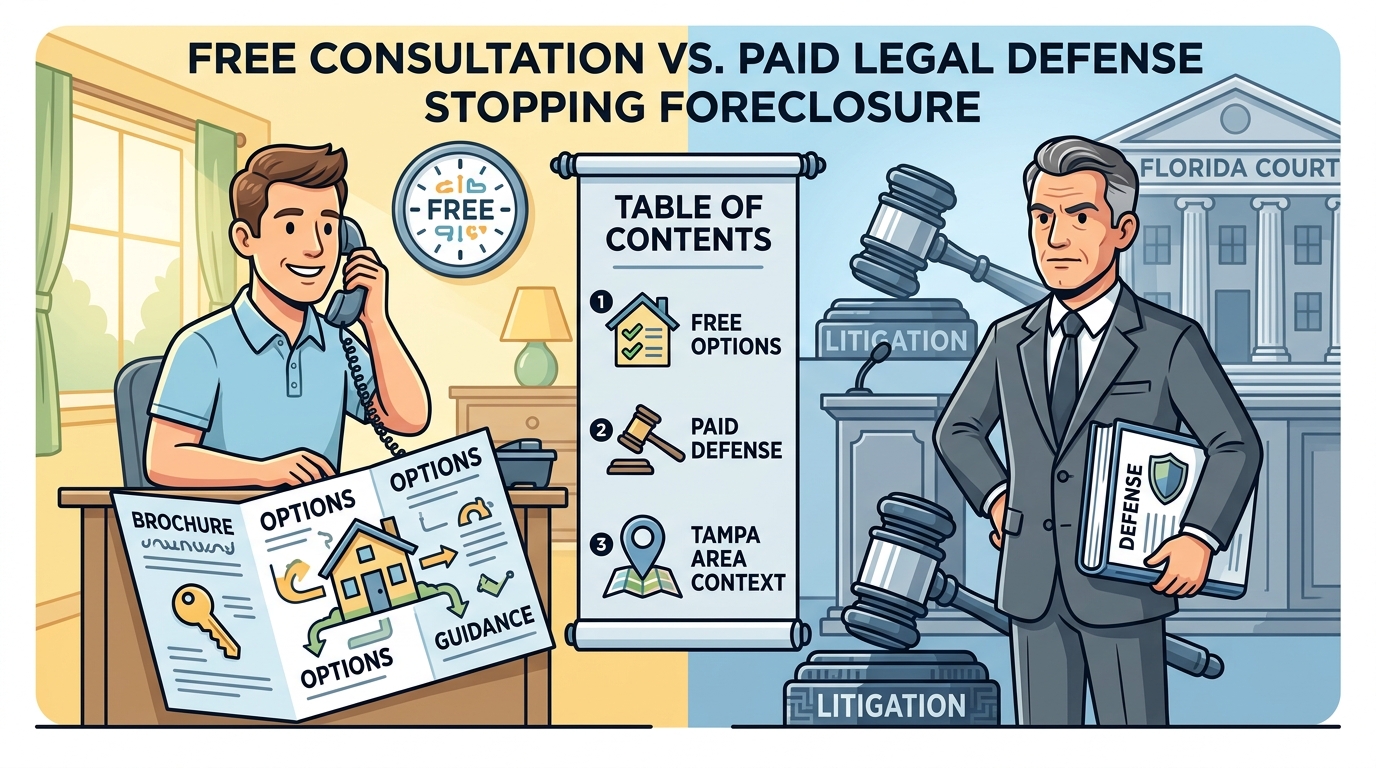
For most Tampa homeowners, a free consultation is the essential first step to understand options, while paid legal defense is required for court litigation. Foreclosure Guard provides a free, no-obligation phone consultation to help you navigate this decision. This guide compares the scope of free resources, such as HUD counseling and legal aid, against the specific needs of a paid attorney in Florida's judicial foreclosure process.
Loss Mitigation Options
Loss mitigation is the process where a lender modifies loan terms to help a borrower avoid foreclosure. Common options include reinstatement, repayment plans, forbearance, and loan modifications. These are often the most cost-effective ways to stop foreclosure because they do not require court litigation. A free consultation can help you identify which loss mitigation options your lender might offer based on your income and hardship.
Identifying the Right Path
Each option has specific eligibility criteria. For example, a loan modification permanently changes your payment, while a forbearance agreement is a temporary pause. Understanding these differences is critical before you sign any documents. Foreclosure Guard can explain these options in plain language during a free call.
HUD Foreclosure Counseling
HUD-approved housing counseling is a free service provided by nonprofit agencies. Counselors help you understand your options, create a budget, and prepare documents for your lender. This is a vital resource for homeowners who are not yet in court. You can find a HUD-approved counselor near you by calling 800-569-4287 or searching the CFPB housing counselor search.
What Counselors Do and Do Not Do
HUD counselors provide financial guidance and help with paperwork. They are not attorneys and cannot represent you in court. If your case has moved to the litigation stage, you will need a licensed Florida attorney in addition to or instead of a counselor.
Paid Attorney Retainers
A paid attorney retainer is a fee you pay to hire a lawyer to represent you in legal proceedings. In Florida, foreclosure is a judicial process, meaning the lender must file a lawsuit. Once you are served with a summons and complaint, you generally have 20 days to respond. A paid attorney is necessary to file this response and defend your case in court.
Costs and Commitments
Retainers vary by firm and the complexity of the case. Some attorneys charge hourly, while others may offer flat fees for specific services. It is important to discuss fees and expectations clearly before signing a retainer agreement. You should never pay a large upfront fee to a non-attorney service that promises to stop foreclosure without legal representation.
Legal Aid Services
Legal aid services provide free or low-cost legal representation to eligible low-income residents. In the Tampa Bay area, Bay Area Legal Services offers free civil legal help, including foreclosure defense, for eligible residents of Hillsborough, Pasco, Pinellas, Manatee, and Sarasota counties. You can reach them at 800-625-2257.
Eligibility and Availability
Legal aid has limited capacity, so waiting lists are common. Eligibility is usually based on income and assets. If you are not eligible for legal aid, you may need to seek private representation or explore other options. The Florida Bar Lawyer Referral Service can help you find a private attorney if you cannot qualify for free legal aid.
Free Consultation Limitations
A free consultation, such as the one offered by Foreclosure Guard, is an informational service. It helps you understand your situation, deadlines, and options. However, it is not legal advice. Foreclosure Guard is not a law firm and does not give legal or tax advice. We are not a government agency and are not affiliated with your lender or mortgage servicer.
When Free Help Is Enough
If you are behind on payments but have not been served with lawsuit papers, a free consultation or HUD counseling may be sufficient to guide you toward a loss mitigation agreement. If you have been served with court papers, a free consultation can help you understand the urgency, but you will need a licensed attorney to respond to the lawsuit.
Foreclosure Attorney Representation
Foreclosure attorney representation involves a licensed lawyer managing your legal defense. This includes filing answers to complaints, negotiating with the lender, and appearing in court. An attorney can also advise you on bankruptcy, which may pause a foreclosure. It is crucial to hire an attorney who specializes in foreclosure defense in Florida.
Choosing the Right Attorney
Look for an attorney with experience in Florida judicial foreclosure. Ask about their fee structure, communication style, and how they handle negotiations with lenders. You can use the Florida Bar Lawyer Referral Service to find a qualified attorney in your area.
HUD Housing Counseling
HUD housing counseling is a comprehensive service that covers budgeting, credit, and housing options. It is free and confidential. Counselors can help you create a budget that shows your lender you are committed to keeping your home. This documentation is often required for loss mitigation applications.
Building a Strong Case
A well-organized budget and hardship letter can strengthen your position when negotiating with a lender. HUD counselors can help you prepare these documents. They can also help you understand the impact of different options on your credit score.
Foreclosure Defense Strategies
Foreclosure defense strategies are legal arguments used to challenge a lender's lawsuit. Common strategies include challenging the standing of the lender, identifying procedural errors, or proving that the loan was not properly assigned. These strategies require legal expertise and are best handled by an attorney.
Common Defenses in Florida
Florida courts require lenders to prove they have the right to foreclose. If the lender cannot prove this, the case may be dismissed. An attorney can review your loan documents to identify potential defenses. Do not attempt to file legal documents yourself without guidance, as errors can hurt your case.
Court Litigation Requirements
Court litigation in Florida involves strict deadlines and procedural rules. After a final judgment, the court sets a sale date. Options narrow quickly once a sale is scheduled. You must act immediately if you are in this stage. A licensed attorney is essential to navigate the court process and protect your rights.
Deadlines That Matter
You generally have 20 days after being served with a summons and complaint to file a written response. Missing this deadline can lead to a default judgment. Keep every letter from your servicer and the court, and write down the date you received it. Confirm all deadlines with a licensed Florida attorney.
Key Takeaways
- A free consultation helps you understand your options and deadlines but is not legal advice.
- HUD-approved housing counseling is free and can help you prepare loss mitigation applications.
- Legal aid services like Bay Area Legal Services provide free legal representation for eligible low-income residents.
- A paid attorney is required to respond to a foreclosure lawsuit and defend your case in court.
- Florida is a judicial foreclosure state, meaning the lender must file a lawsuit in court.
- You generally have 20 days to respond to a foreclosure lawsuit after being served.
- Be wary of scams that ask for large upfront fees or ask you to sign over your deed.
- Foreclosure Guard offers a free, no-obligation phone consultation to help you understand your next steps.
Frequently Asked Questions
Is a free consultation enough to stop foreclosure?
A free consultation can help you understand your options and deadlines. If you are not yet in court, it may be enough to guide you toward a loss mitigation agreement. If you have been served with lawsuit papers, you will need a licensed attorney to respond.
What is the difference between HUD counseling and legal aid?
HUD counseling provides free financial guidance and help with paperwork. Legal aid provides free legal representation for eligible low-income residents. HUD counselors are not attorneys and cannot represent you in court.
How much does a foreclosure attorney cost in Florida?
Can I represent myself in a foreclosure lawsuit?
You can represent yourself, but it is risky. Foreclosure litigation involves complex legal rules and strict deadlines. A licensed attorney is strongly recommended to protect your rights.
What are the red flags for foreclosure rescue scams?
Red flags include large upfront fees, requests to sign over your deed, guarantees to stop foreclosure, and requests to pay your mortgage to a third party. Foreclosure Guard does not ask for upfront fees or ask you to sign over your deed.
How do I find a HUD-approved housing counselor?
You can call 800-569-4287 or search the CFPB housing counselor search tool online. These counselors provide free and confidential services.
What should I do if I have been served with foreclosure papers?
Do not ignore the papers. You generally have 20 days to file a written response. Contact a licensed Florida attorney immediately to discuss your options.
Does Foreclosure Guard provide legal advice?
No. Foreclosure Guard is not a law firm and does not give legal or tax advice. We provide a free, no-obligation phone consultation to help you understand your options and connect you with appropriate resources.
Conclusion
Choosing between a free consultation and paid legal defense depends on where you are in the foreclosure process. If you are behind on payments but not yet in court, a free consultation or HUD counseling can help you explore loss mitigation options. If you have been served with lawsuit papers, you need a licensed attorney to defend your case. Foreclosure Guard offers a free, no-obligation phone consultation to help you understand your situation and next steps. We are not a law firm, not a government agency, and not affiliated with any lender. We never sell your personal information. To get started, for a free consultation.