

What to Discuss With a Foreclosure Counselor Before Your Lender Acts
Before your lender files a lawsuit, you should discuss your income, expenses, and hardship history with a counselor to identify which loss mitigation options are available. Acting early allows you to explore alternatives like loan modifications or forbearance before legal deadlines compress your choices. Foreclosure Guard offers a free, no-obligation phone consultation in the Tampa, FL area to help you understand these options. We are not a law firm, not a government agency, and not affiliated with any lender or servicer. We do not give legal or tax advice and never sell your personal information.
Why Timing Is Critical in Florida Foreclosure
Florida uses a judicial foreclosure process, meaning your lender must file a lawsuit in court before your home can be sold. Under federal rules, a mortgage servicer generally cannot make the first foreclosure filing until you are more than 120 days behind on payments. This window is your most powerful asset. Once a lawsuit is filed, you generally have only 20 days to respond to the court. Missing this deadline can lead to a default judgment, which severely limits your ability to save your home. Understanding the specific stages of Florida foreclosure helps you see exactly where you stand in this timeline.
Key Financial Details to Prepare
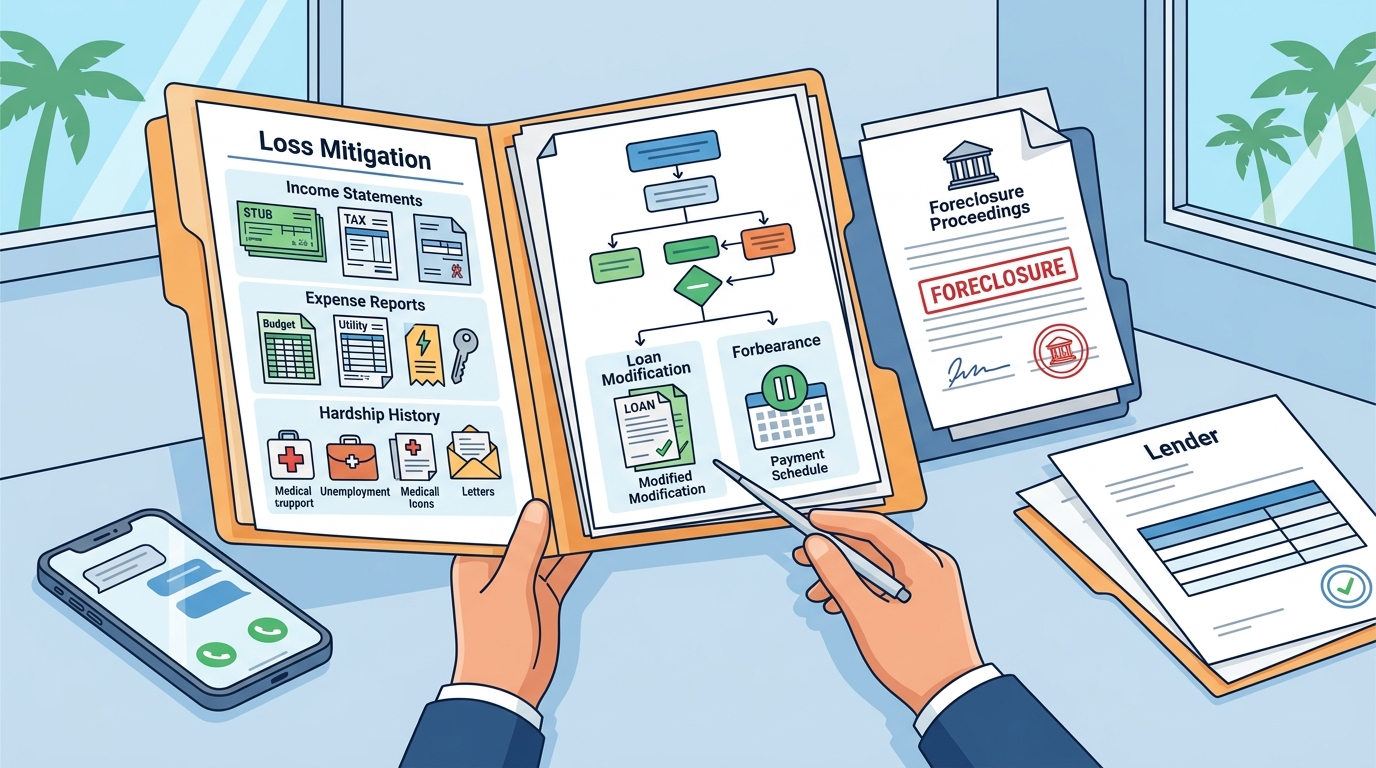
Counselors need accurate data to build a case for help. You should prepare a clear picture of your monthly cash flow. This includes your total take-home pay from all sources, including any benefits or assistance. You must also list every monthly expense, from utilities and groceries to insurance and healthcare. Finally, detail all debt payments, such as credit card minimums, auto loans, and student loans. Using a tool like the free mortgage budget calculator can help you organize these numbers before your call. Accurate data allows the counselor to calculate your debt-to-income ratio, which is a key metric lenders use to determine eligibility for assistance.
Explaining Your Hardship Clearly
Lenders require a written explanation of why you cannot make your payments. This is known as a hardship letter. You should discuss the specific life event that caused your financial distress with your counselor. Common causes include job loss, medical emergencies, divorce, or the death of a family member. The counselor can help you articulate this story in a way that is clear and compelling. They can also help you identify which documents support your claim, such as pay stubs, medical bills, or court orders. A well-documented hardship is often the difference between a denied application and an approved modification.
Understanding Your Loss Mitigation Options
There are several ways to resolve a mortgage delinquency, and not all are available to every homeowner. A counselor will explain which options fit your specific situation. Reinstatement involves paying all missed payments and fees in one lump sum. A repayment plan allows you to catch up over several months on top of your regular payment. Forbearance is a temporary pause or reduction in payments during a short-term hardship. A loan modification permanently changes your loan terms to make the payment more affordable. You should also discuss alternatives like a short sale or deed in lieu of foreclosure if staying in the home is not feasible. Reviewing the full Florida foreclosure guide provides a plain-language overview of these paths.
Protecting Yourself From Scams
Desperate homeowners are often targeted by foreclosure rescue scams. You must be vigilant about who you trust with your financial information. Be very careful with anyone who asks for a large upfront fee before doing any work. Never sign over your deed or sign documents you do not understand without having an attorney review them. Do not pay your mortgage to a third party; always pay directly to your servicer. Foreclosure Guard does not ask for upfront fees, does not ask you to sign over your deed, and does not guarantee that we can stop foreclosure. We provide information and guidance, but we are not a law firm. For legal advice, you should speak with a licensed Florida attorney. You can find free legal help through Bay Area Legal Services or the Florida Bar Lawyer Referral Service.
Key Takeaways
- Act before the 120-day mark to keep all loss mitigation options open.
- Prepare a detailed budget including income, expenses, and debts.
- Write a clear hardship letter explaining the specific cause of your delinquency.
- Understand the difference between reinstatement, modification, and forbearance.
- Never pay upfront fees to a third party or sign documents you do not understand.
- Use free resources like HUD-approved counselors and legal aid services.
Frequently Asked Questions
How long does it take for a lender to file for foreclosure in Florida?
Under federal rules, a servicer generally cannot file for foreclosure until you are more than 120 days behind on payments. However, you should act much earlier to explore options.
Is Foreclosure Guard a law firm?
No, Foreclosure Guard is not a law firm and does not give legal or tax advice. We are a resource for information and guidance. For legal advice, consult a licensed Florida attorney.
What documents should I bring to a counseling session?
You should bring recent mortgage statements, any letters from your servicer, proof of income, a list of monthly expenses, and a written explanation of your hardship.
Can a counselor guarantee that I will keep my home?
No, no one can guarantee a specific outcome. A counselor can help you understand your options and prepare the best possible application, but the decision rests with your lender.
What is a loss mitigation application?
A loss mitigation application is a formal request to your lender for help with your mortgage. It includes your financial information and a hardship letter. Submitting a complete application early gives you the strongest protections under federal rules.
Take the Next Step
Understanding your options is the first step toward protecting your home. If you are facing foreclosure in the Tampa, FL area, you can reach out to Foreclosure Guard for a free, confidential consultation. We will walk you through your situation in plain language, with no pressure and no judgment. You can also contact HUD-approved housing counselors for free assistance. To start your assessment, today.