

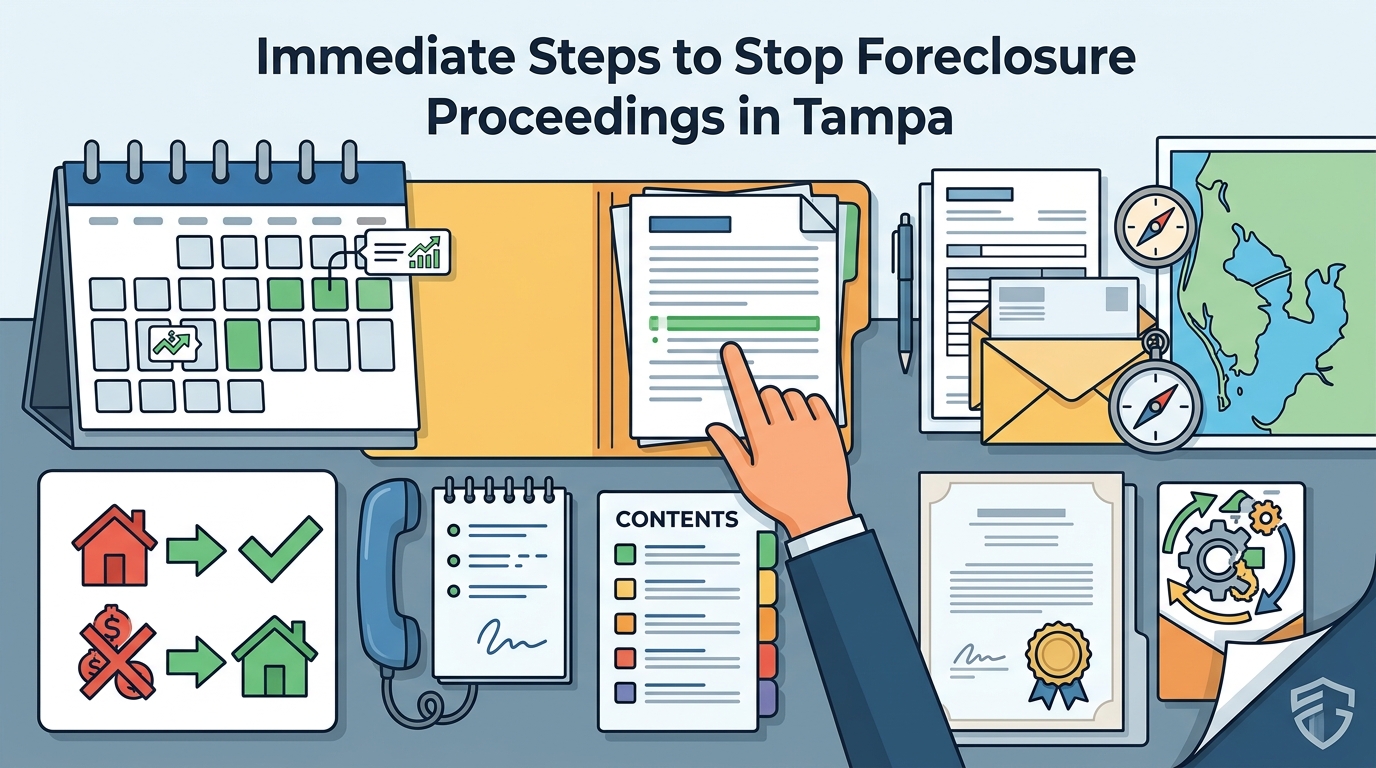
Foreclosure Guard offers a free, no-obligation phone consultation in the Tampa, FL area to help homeowners understand their options. We are not a law firm, not a government agency, and not affiliated with any lender or servicer. This guide outlines the immediate steps a consultation covers, including loss mitigation, lender contact, and legal protections.
Loss Mitigation Options
Loss mitigation is the process where a lender works with a borrower to avoid foreclosure. It is a formal program required by federal regulations for most mortgage loans. During a consultation, we review which loss mitigation options fit your specific financial situation.
Common Loss Mitigation Programs
Lenders typically offer several types of loss mitigation. These include reinstatement, repayment plans, and loan modifications. Each option has different requirements and long-term effects on your credit and housing stability.
Reinstatement involves paying the past-due amount to bring the loan current. A repayment plan allows you to catch up on missed payments over time. A loan modification changes the terms of your existing loan. Understanding these differences is the first step in stopping foreclosure proceedings.
Lender and Servicer Contact
Contacting your mortgage servicer is the most critical immediate step. Federal rules require servicers to attempt contact with you within specific timeframes after you miss a payment. Ignoring these calls and letters is the fastest way to lose your home.
The 120-Day Rule
Under federal regulations, a servicer generally cannot file a foreclosure lawsuit until you are more than 120 days behind on payments. This window is your primary opportunity to negotiate. Submitting a complete loss mitigation application during this period provides the strongest legal protections.
When you call your servicer, ask for the loss mitigation department. Do not just speak to a collections agent. Request a written explanation of your options. Keep a log of every call, including the date, time, and the name of the person you spoke with.
Bankruptcy Automatic Stay
Bankruptcy is a legal process that can immediately stop foreclosure through an automatic stay. This stay is a court order that halts all collection activities, including foreclosure, the moment you file. It is a powerful tool but requires careful legal strategy.
When to Consider Bankruptcy
Bankruptcy is not a one-size-fits-all solution. It can be a temporary pause or a permanent solution depending on the chapter filed. You must consult with a licensed Florida attorney to determine if bankruptcy is appropriate for your case. Foreclosure Guard does not provide legal advice but can help you understand the timeline before you speak with an attorney.
If you are served with foreclosure papers, you generally have 20 days to respond in court. Filing for bankruptcy can stop this process, but you must act before the final judgment is entered. Time is the most critical factor in this decision.
Loan Modification
A loan modification is a permanent change to the terms of your mortgage. It is designed to make your monthly payment affordable based on your current income. This is often the best long-term solution for homeowners who intend to stay in their property.
Eligibility and Process
Eligibility for a loan modification depends on your income, expenses, and the value of your home. You must demonstrate a financial hardship that is likely to be temporary or that your income has permanently decreased. The application process is lengthy and requires extensive documentation.
During a consultation, we help you assess whether a modification is a realistic goal. We explain what your lender will ask for and how to prepare. This preparation is essential because incomplete applications are a leading cause of denial.
Forbearance Agreements
A forbearance agreement is a temporary pause or reduction in mortgage payments. It is designed for short-term hardships where you expect your income to return to normal. This option allows you to keep your home while you stabilize your finances.
Types of Forbearance
There are two main types of forbearance. The first is a temporary suspension of payments. The second is a reduction in the payment amount. After the forbearance period ends, you must resume payments. You may need to pay the missed amounts in a lump sum or over time.
Forbearance is not a permanent fix. It is a bridge to stability. If your financial situation is not expected to improve, a forbearance may not be the right choice. We help you evaluate the duration of your hardship to determine if this option fits.
Housing Counselor Assistance
HUD-approved housing counselors provide free or low-cost assistance to homeowners. They are trained to help you navigate the foreclosure process and understand your options. This is a vital resource that complements any consultation you receive.
How to Find a Counselor
You can find a HUD-approved housing counselor by calling 800-569-4287. You can also search for counselors by ZIP code on the Consumer Financial Protection Bureau website. These counselors are independent and work in your best interest, not the lender's.
Working with a housing counselor is highly recommended. They can help you prepare your loss mitigation application and review your budget. This professional guidance increases your chances of success with your lender.
Financial Documentation Gathering
Gathering financial documentation is the foundation of any loss mitigation application. Lenders require proof of your income, expenses, and assets. Without complete and accurate documents, your application will be delayed or denied.
Essential Documents
You need to collect recent mortgage statements and any letters from your servicer. You must also provide proof of income, such as pay stubs, tax returns, or benefit letters. A list of your monthly expenses is also required. Use our Budget Calculator to organize your numbers.
Organize these documents in a clear folder or digital file. Label each document with the date and type. This organization saves time and reduces stress when you submit your application. It also helps you track deadlines and responses from your lender.
Key Takeaways
- Act immediately. The sooner you contact your servicer, the more options you have.
- Do not ignore calls or letters from your mortgage servicer.
- Submit a complete loss mitigation application as soon as possible.
- Consider consulting a licensed Florida attorney if you are served with lawsuit papers.
- Use free resources like HUD-approved housing counselors for professional guidance.
- Gather all financial documents before applying for help.
- Be wary of scams that ask for upfront fees or ask you to sign over your deed.
Frequently Asked Questions
Is Foreclosure Guard a law firm?
No. Foreclosure Guard is not a law firm and does not give legal or tax advice. We are not a government agency and are not affiliated with your lender or mortgage servicer. For legal advice, speak with a licensed Florida attorney.
How much does a consultation cost?
Our initial phone consultation is free and no-obligation. We do not charge for the first conversation where we review your situation and explain your options.
Can I stop foreclosure if I am already behind on payments?
Yes, in many cases. Federal rules provide protections if you act early. The key is to contact your servicer and submit a loss mitigation application before the 120-day mark.
What is the difference between a short sale and a deed in lieu?
A short sale is selling your home for less than you owe with lender approval. A deed in lieu is voluntarily giving your home back to the lender. Both are alternatives to foreclosure but have different credit impacts.
Do you sell my personal information?
No. We never sell your personal information. We use your data only to respond to your request and help you with your situation.
What should I do if I receive a foreclosure lawsuit?
Contact a licensed Florida attorney immediately. You generally have 20 days to respond to a lawsuit. Missing this deadline can result in a default judgment. You can find free legal help through Bay Area Legal Services or the Florida Bar Lawyer Referral Service.
Conclusion
Stopping foreclosure requires immediate action and clear understanding of your options. Foreclosure Guard provides a free, confidential consultation to help you navigate this process. We are not a law firm, but we help you prepare for the next steps. To plan your visit, for a free assessment.