

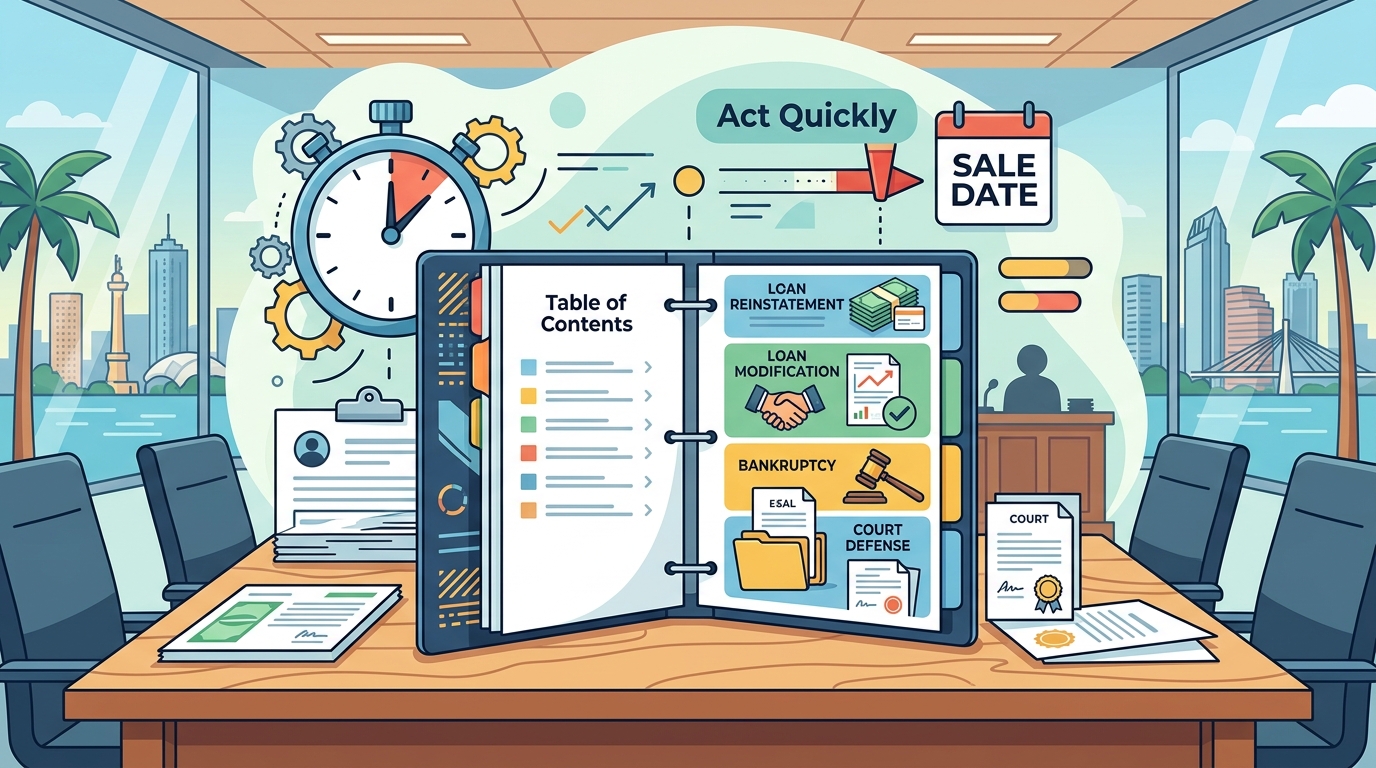
If you are facing foreclosure in Florida, your primary legal options include reinstating the loan, negotiating a loan modification, filing for bankruptcy, or defending the lawsuit in court. Because Florida is a judicial foreclosure state, you have the right to respond to the lawsuit and explore loss mitigation programs before a final judgment is entered. Acting quickly is critical, as your available options narrow significantly once a sale date is scheduled.
Understanding the Judicial Foreclosure Process
Florida uses a judicial foreclosure process, which means your lender must file a lawsuit in circuit court to take your home. This legal requirement provides a buffer period that non-judicial states do not offer. Under federal rules, a mortgage servicer generally cannot make the first foreclosure filing until you are more than 120 days behind on payments. This window is your most valuable asset for exploring alternatives.
Once the lawsuit is filed, you will be served with a summons and complaint. You generally have 20 days after being served to file a written response with the court. Missing this deadline can result in a default judgment, which severely limits your ability to fight the foreclosure. Many Florida courts also offer foreclosure mediation or case management programs that can help resolve disputes without a full trial. Understanding these procedural steps is the first step in protecting your rights.
Loss Mitigation and Loan Modification Options
Loss mitigation is the process of working with your lender to find a solution that avoids foreclosure. Common options include reinstatement, repayment plans, forbearance, and loan modifications. Reinstatement involves paying everything you are behind on, plus fees, in one payment to bring the loan current. A repayment plan allows you to catch up over several months on top of your regular payment.
A loan modification permanently changes your loan terms to make the payment more affordable. This is often the best option for homeowners who intend to stay in the property long-term. Forbearance offers a temporary pause or reduction in payments during a short-term hardship. To pursue these options, you must submit a complete application to your servicer. Submitting a complete application early gives you the strongest protections under federal law. You can use the Budget Calculator to determine if a modified payment fits your current income.
Bankruptcy as a Foreclosure Defense
Filing for bankruptcy can pause a foreclosure through an automatic stay. This legal tool stops most collection actions, including foreclosure, while your case is pending. Chapter 13 bankruptcy allows you to propose a plan to catch up on missed payments over three to five years. Chapter 7 bankruptcy may allow you to discharge the mortgage debt, though it does not remove the lien on the property.
Bankruptcy is a complex legal process that requires the guidance of a licensed attorney. It is not a one-size-fits-all solution and may not be appropriate for every situation. If you are considering bankruptcy, you should consult with a bankruptcy attorney before deciding. This option can be powerful but requires careful planning and legal expertise to execute correctly.
Protecting Yourself from Foreclosure Rescue Scams
Desperate homeowners are often targeted by foreclosure rescue scams. These fraudulent schemes promise to stop foreclosure in exchange for large upfront fees. Be very careful with anyone who asks for a large upfront fee before doing any work. Legitimate services do not require large payments before completing work.
Never sign over your deed or sign documents you do not understand without having an attorney review them. Guarantees to stop foreclosure are a major red flag, as no one can guarantee the outcome of a legal process. Additionally, never pay your mortgage to a third party. Always pay your lender directly or through a verified escrow service. Foreclosure Guard does not ask for upfront fees, does not ask you to sign over your deed, and does not guarantee outcomes. We provide free, confidential consultations to help you understand your options without pressure.
Free Legal and Housing Resources
There are several free and low-cost resources available to Florida homeowners facing foreclosure. HUD-approved housing counselors can help you understand your options for free. You can find a HUD-approved counselor near you by calling 800-569-4287. These counselors are trained to help you navigate loss mitigation programs and budget planning.
If you have been served with a foreclosure lawsuit, you should talk to a licensed attorney as soon as possible. Bay Area Legal Services offers free civil legal help, including foreclosure, for eligible low-income residents of Hillsborough, Pasco, Pinellas, Manatee, and Sarasota counties. You can reach them at 800-625-2257. The Florida Bar Lawyer Referral Service provides statewide referrals to private attorneys at 800-342-8011. These resources can provide the legal guidance you need to protect your home.
Key Takeaways
- Florida is a judicial foreclosure state, requiring lenders to file a lawsuit before selling your home.
- You generally have 20 days to respond to a foreclosure lawsuit after being served.
- Loss mitigation options include reinstatement, repayment plans, forbearance, and loan modifications.
- Bankruptcy can pause foreclosure but requires the guidance of a licensed attorney.
- Foreclosure rescue scams often involve upfront fees, deed signing, and guaranteed outcomes.
- Free help is available from HUD-approved counselors, Bay Area Legal Services, and the Florida Bar.
- Acting early preserves more options and reduces the risk of a default judgment.
Frequently Asked Questions
What is the first step I should take if I receive a foreclosure lawsuit?
The first step is to file a written response with the court within 20 days of being served. You should also contact a licensed attorney to discuss your case and explore loss mitigation options with your lender.
Can I stop a foreclosure after a sale date is set?
Options narrow quickly once a sale date is set, but you may still be able to reinstate the loan, sell the home, or reach an agreement with the lender. Acting immediately is critical to preserving these options.
Is Foreclosure Guard a law firm?
No, Foreclosure Guard is not a law firm and does not give legal or tax advice. We are not a government agency and are not affiliated with your lender or mortgage servicer. We provide free, confidential consultations to help you understand your options.
How much does it cost to get help from Foreclosure Guard?
Our initial phone consultation is free and no obligation. We do not charge upfront fees for our services. We never sell your personal information.
What are the red flags of a foreclosure rescue scam?
Red flags include requests for large upfront fees, demands to sign over your deed, guarantees to stop foreclosure, and requests to pay your mortgage to a third party. Legitimate services do not engage in these practices.
Where can I find free legal help for foreclosure in Tampa?
Bay Area Legal Services offers free civil legal help for eligible low-income residents in the Tampa Bay area. You can also contact the Florida Bar Lawyer Referral Service for referrals to private attorneys.
Take the Next Step with Confidence
Facing foreclosure is stressful, but you have options. Understanding the legal process and seeking the right help can make a significant difference. Foreclosure Guard offers a free, no-obligation phone consultation in the Tampa, FL area to help you understand your situation. We are not a law firm, not a government agency, and not affiliated with any lender or servicer. We provide clear, honest guidance without pressure. To plan your next step, for a free consultation.