

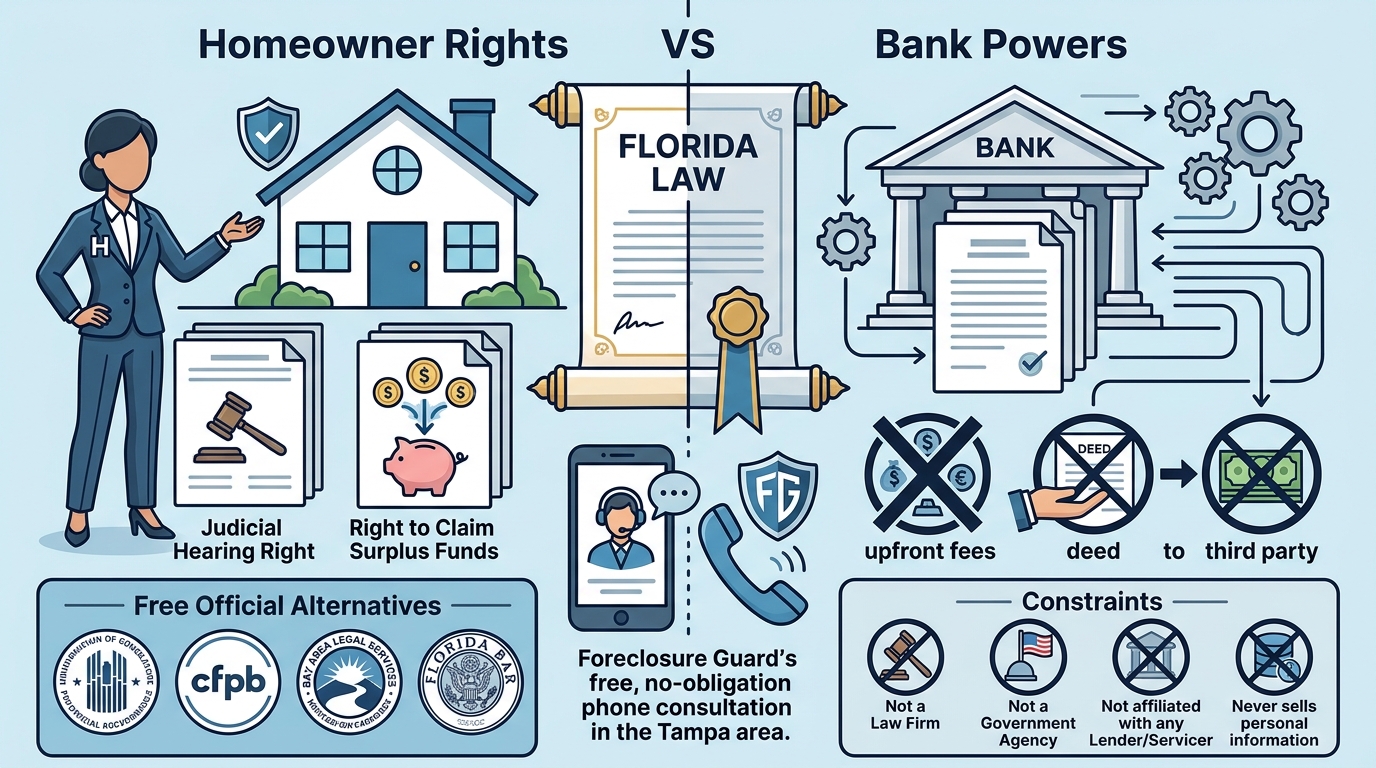
Homeowners in Florida have specific legal rights, including the right to a judicial hearing and the right to claim surplus funds, while banks must follow strict procedural rules to seize property. Foreclosure Guard offers a free, no-obligation phone consultation in the Tampa, FL area to help you understand these rules. We are not a law firm, not a government agency, and not affiliated with any lender or servicer. We give no legal or tax advice and never sell your personal information.
Homeowner Legal Protections
Florida is a judicial foreclosure state, meaning banks cannot simply take your house without a court order. Judicial foreclosure is a legal process where a lender must file a lawsuit in circuit court to obtain a judgment before a sale can occur. This requirement provides homeowners with a critical window of time to respond, negotiate, or seek legal counsel. Under federal rules, a mortgage servicer generally cannot make the first foreclosure filing until you are more than 120 days behind on payments. This delay is designed to give borrowers time to explore loss mitigation options.
Homeowners also have the right to be served with a summons and complaint, which triggers a 20-day deadline to file a written response with the court. Missing this deadline can lead to a default judgment, but responding preserves your right to contest the case. Additionally, you have the right to remain in your home until the court process is complete and a sale is finalized. If your home sells at auction for more than the judgment amount, you may be entitled to the surplus funds, which you can claim through the court.
Bank Powers and Limitations
Banks hold significant power in the foreclosure process, but their actions are constrained by state and federal law. A bank can accelerate the loan, declaring the entire balance due, but this usually requires a prior written notice of default. They can file a lawsuit, obtain a judgment, and schedule a public auction. However, they cannot bypass the judicial process in Florida. They also cannot make the initial filing before the 120-day delinquency mark, unless specific exceptions apply. This limitation is a key protection for homeowners who act early.
Banks are also required to provide written responses to loss mitigation applications. If you submit a complete application for help, the servicer must acknowledge it and provide a written decision. This rule prevents lenders from ignoring your request for assistance. While banks can sell your home at auction, they must follow strict procedures for the sale, including proper notice and the issuance of a certificate of sale. Understanding these limits helps you know when a bank is acting within its rights and when it may be violating procedural rules.
Comparison of Rights and Powers
| Category | Homeowner Rights | Bank Powers |
|---|---|---|
| Initiation | Right to receive notice of default | Can file lawsuit after 120 days delinquent |
| Court Process | Right to respond within 20 days | Must obtain judgment before sale |
| Loss Mitigation | Right to written response to application | Must review and respond to complete applications |
| Post-Sale | Right to claim surplus funds | Can sell at auction and issue certificate of title |
Choosing the Right Path
Choose to respond to the lawsuit if you have received court papers. This is your primary legal protection. If you are behind but have not been sued, choose to contact your servicer immediately to explore loss mitigation options. If you believe the bank has violated procedural rules, choose to consult a licensed Florida attorney. Foreclosure Guard can help you understand which path fits your situation during a free consultation. We do not provide legal advice, but we can explain the general process and connect you with resources.
Frequently Asked Questions
Can a bank take my house without a court order in Florida?
No. Florida is a judicial foreclosure state. Banks must file a lawsuit and obtain a court judgment before they can sell your home at auction. They cannot simply change the locks or take possession without a court order.
What happens if I ignore the foreclosure lawsuit?
If you do not respond within 20 days of being served, the court may enter a default judgment in favor of the bank. This makes it much harder to stop the sale. It is critical to respond or seek legal help immediately.
Do I have to pay the bank directly to stop foreclosure?
No. You should never pay a third party to stop foreclosure. Any entity asking for upfront fees to stop foreclosure is likely a scam. Work directly with your lender or a licensed attorney. Foreclosure Guard does not ask for upfront fees to stop foreclosure.
Can I stay in my home during the foreclosure process?
Yes. You have the right to stay in your home until the court process is complete and a sale is finalized. You cannot be evicted before the foreclosure sale is completed and the new owner takes possession.
What if my home sells for more than I owe?
If the auction price exceeds the judgment amount, the extra money is called surplus funds. You may be entitled to this money. You can file a claim with the court to recover it. Be cautious with anyone who offers to recover it for a large percentage.
Next Steps
If you are facing foreclosure in Tampa or the surrounding Florida area, Foreclosure Guard is here to help you understand your options. We offer a free, confidential phone consultation where we can explain the process in plain language. We are not a law firm, not a government agency, and not affiliated with your lender. For legal advice, speak with a licensed Florida attorney. Free housing counseling is available from HUD-approved counselors at 800-569-4287. You can also contact Foreclosure Guard to request a call back.