

Immediate Steps to Stop Foreclosure: A Free Consultation Guide
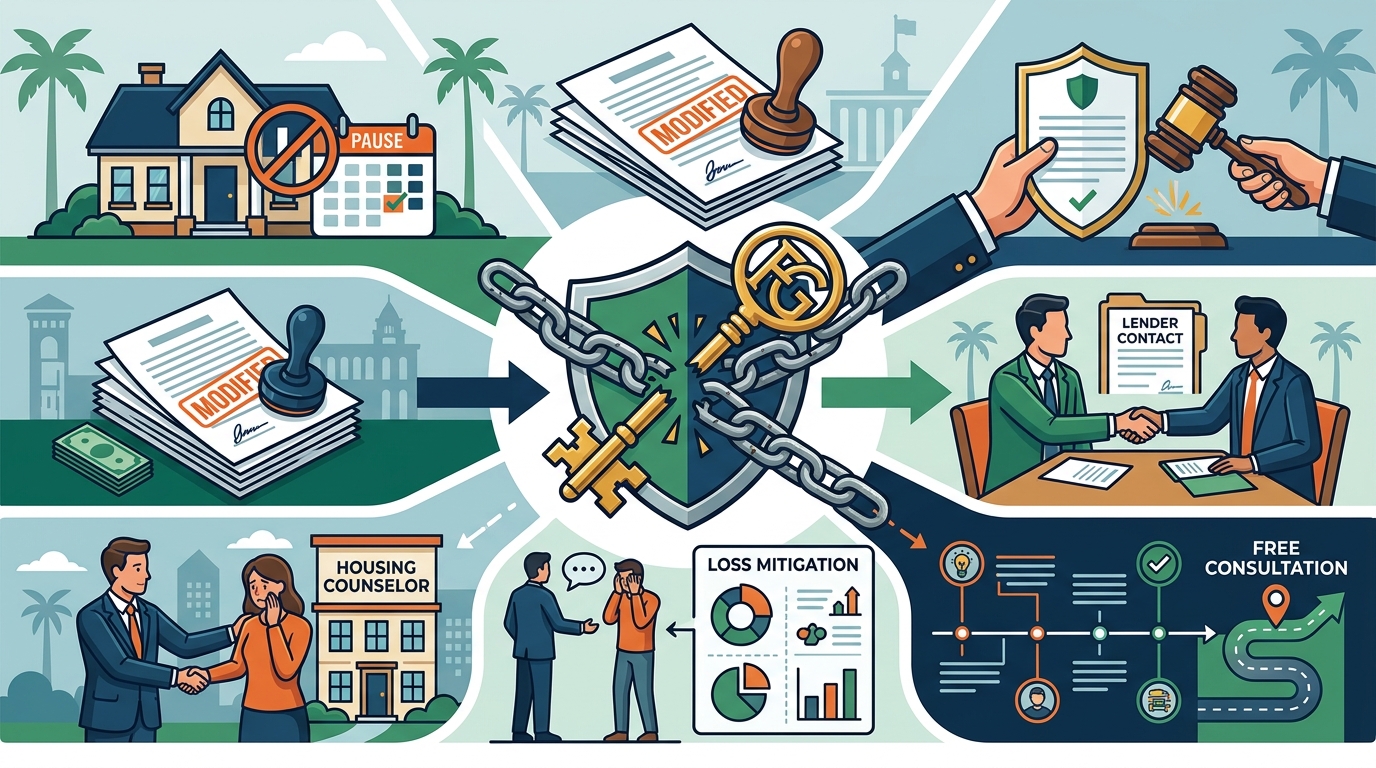
Foreclosure Guard in Tampa, Florida, provides a free, confidential consultation to outline immediate steps for stopping foreclosure. This guide details six critical actions: loss mitigation, lender contact, bankruptcy stays, loan modifications, forbearance, and housing counselor assistance. We explain how each option works and how to use them to protect your home.
Loss Mitigation Options
Loss mitigation is the process where a lender works with a borrower to avoid foreclosure. It is the first line of defense in any foreclosure prevention strategy. During a free consultation, we review your specific financial situation to determine which loss mitigation programs you qualify for. These programs are designed to keep you in your home by adjusting the terms of your loan or providing temporary relief.
Types of Loss Mitigation
Lenders typically offer several types of loss mitigation. Reinstatement involves paying the full amount of missed payments plus fees to bring the loan current. A repayment plan allows you to catch up on missed payments over time while making your regular monthly payment. Forbearance agreements pause or reduce payments for a set period. Loan modifications permanently change the terms of your loan, such as the interest rate or loan term, to make the payment affordable.
Eligibility Factors
Eligibility for loss mitigation depends on your income, expenses, and the reason for your default. Lenders look for a sustainable income source that can cover the modified payment. They also consider your equity in the home and your credit history. Acting early is crucial because the longer you wait, the fewer options may be available. A free consultation helps you understand which of these options fits your specific circumstances.
Contacting Your Lender or Servicer
Direct communication with your mortgage servicer is a critical immediate step. Many homeowners avoid calling their lender out of fear or embarrassment. However, federal regulations require servicers to offer loss mitigation options to borrowers who are delinquent. The sooner you contact them, the more options you may have. Foreclosure Guard helps you prepare for this conversation so you can present your case clearly and confidently.
What to Prepare
Before calling, gather your most recent mortgage statements, pay stubs, and a list of your monthly expenses. Have a clear explanation of why you fell behind, such as job loss or medical issues. This documentation helps the servicer understand your situation and process your request faster. Keep a record of every call, including the date, time, and the name of the representative you spoke with.
Understanding the 120-Day Rule
Under federal rules, a mortgage servicer generally cannot file for foreclosure until you are more than 120 days behind on payments. This window provides time to explore options. However, waiting until the last minute is risky. Submitting a complete application for help early gives you the strongest protections. A free consultation can help you navigate this timeline and ensure you do not miss critical deadlines.
Bankruptcy and the Automatic Stay
Bankruptcy is a legal process that can stop foreclosure immediately through an automatic stay. The automatic stay is a court order that halts all collection activities, including foreclosure, the moment you file for bankruptcy. This provides a temporary pause that allows you to catch up on payments or reorganize your finances. While bankruptcy is a serious step, it can be a powerful tool in certain situations.
Chapter 7 vs. Chapter 13
Chapter 7 bankruptcy may allow you to discharge certain debts, but it does not eliminate your mortgage lien. You may lose your home if you cannot catch up on missed payments. Chapter 13 bankruptcy allows you to keep your home by paying missed mortgage payments over a period of three to five years. The choice between these chapters depends on your income, equity, and long-term financial goals. A free consultation can help you understand the implications of each option.
Consulting an Attorney
Bankruptcy requires the guidance of a licensed attorney. Foreclosure Guard is not a law firm and does not provide legal advice. However, we can help you understand the basics and connect you with a licensed Florida attorney if bankruptcy is a viable option for your situation. We also provide referrals to free legal help resources in the Tampa Bay area.
Loan Modification Strategies
A loan modification is a permanent change to the terms of your mortgage. It is one of the most effective ways to stop foreclosure if you have a long-term income source. The goal is to make your monthly payment affordable based on your current income and expenses. Lenders are more likely to approve a modification if you can demonstrate that you can sustain the new payment over time.
Types of Modifications
Common modifications include reducing the interest rate, extending the loan term, or adding missed payments to the end of the loan. Some programs may also reduce the principal balance, though this is less common. The specific type of modification depends on your loan type and the lender's guidelines. A free consultation helps you identify which modification type is most likely to be approved.
The Application Process
Applying for a loan modification requires detailed documentation. You will need to provide proof of income, a hardship letter, and a budget showing your monthly expenses. The process can take several months, so it is important to start early. Foreclosure Guard can help you prepare the necessary documents and understand what to expect during the review process.
Forbearance Agreements
A forbearance agreement is a temporary arrangement where the lender agrees to pause or reduce your mortgage payments. It is designed for borrowers facing a short-term hardship, such as a temporary job loss or medical emergency. During the forbearance period, you are not required to make full payments, which can provide immediate relief. After the period ends, you must resume payments and may need to repay the missed amounts.
How Forbearance Works
Forbearance agreements vary in length and terms. Some allow you to make reduced payments, while others allow you to make no payments at all. The missed payments are typically added to the end of your loan or repaid in a lump sum. It is important to understand the terms of the agreement before accepting it. A free consultation can help you evaluate whether forbearance is the right choice for your situation.
Impact on Credit
Forbearance can affect your credit score, but it is generally less damaging than a completed foreclosure. The specific impact depends on how the agreement is reported to the credit bureaus. Acting early and communicating with your lender can help minimize negative effects. We can explain how different options may show up on your credit before you make a decision.
Housing Counselor Assistance
HUD-approved housing counselors provide free or low-cost assistance to homeowners facing foreclosure. They are trained to help you understand your options and work with your lender. Housing counselors can review your finances, help you prepare documents, and negotiate with your servicer. They are an invaluable resource for navigating the complex process of foreclosure prevention.
Finding a Counselor
You can find a HUD-approved housing counselor by calling 800-569-4287 or searching online by ZIP code. These counselors are independent and not affiliated with your lender. They provide unbiased advice and can help you make informed decisions. Foreclosure Guard also connects you with free HUD-approved housing counselors as part of our service.
What to Expect
A housing counselor will review your income, expenses, and debts to determine your eligibility for assistance programs. They can help you apply for loss mitigation options and negotiate with your lender. They also provide financial education to help you avoid future problems. Working with a counselor can increase your chances of successfully stopping foreclosure.
Key Takeaways
- Loss mitigation is the primary process lenders use to avoid foreclosure, including reinstatement, repayment plans, forbearance, and modifications.
- Contacting your servicer early is critical, as federal rules require them to offer options before filing for foreclosure.
- The 120-day rule provides a window of time to explore options before a foreclosure lawsuit can be filed.
- Bankruptcy triggers an automatic stay that halts foreclosure immediately, but it requires legal guidance.
- Loan modifications permanently change loan terms to make payments affordable based on current income.
- Forbearance agreements provide temporary relief for short-term hardships but require repayment later.
- HUD-approved housing counselors offer free, unbiased assistance in navigating foreclosure options.
- Acting early and seeking professional guidance significantly increases the chances of keeping your home.
Frequently Asked Questions
What is the first step to stop foreclosure?
The first step is to contact your mortgage servicer and request loss mitigation options. You should also seek a free consultation with a foreclosure prevention specialist to understand all your options.
How long does it take to stop foreclosure?
The timeline varies depending on the option chosen. Bankruptcy provides an immediate stay, while loan modifications can take several months. Acting early is the best way to speed up the process.
Can I stop foreclosure if I am more than 120 days behind?
Yes, you still have options, but they may be more limited. You can still apply for loss mitigation, file for bankruptcy, or sell your home. A free consultation can help you determine the best path forward.
Is bankruptcy a good option for stopping foreclosure?
Bankruptcy can be effective, especially Chapter 13, which allows you to catch up on payments over time. However, it has long-term consequences and requires legal advice. Consult with an attorney to determine if it is right for you.
How do I find a free housing counselor?
You can call 800-569-4287 to find a HUD-approved housing counselor near you. You can also search online by ZIP code for free and low-cost legal help resources.
What documents do I need for a loan modification?
You will need recent pay stubs, tax returns, bank statements, and a hardship letter. A free consultation can help you prepare the correct documentation for your application.
Conclusion
Stopping foreclosure requires immediate action and a clear understanding of your options. Foreclosure Guard in Tampa, Florida, provides a free, confidential consultation to help you navigate this process. We review your situation, explain your options, and connect you with the right resources. Whether you are considering loss mitigation, bankruptcy, or working with a housing counselor, we are here to help you make informed decisions. Do not wait until it is too late. Take the first step today and protect your home.
To plan your visit, for a free consultation.