

How Often Should a Distressed Homeowner Seek Legal Advice to Avoid Losing Their Property?
Distressed homeowners should seek legal advice immediately upon receiving a default notice or foreclosure lawsuit, and again at every major procedural milestone. Foreclosure Guard in Tampa, Florida, helps homeowners understand these critical timing windows. This guide covers loss mitigation options, foreclosure notice triggers, and deficiency judgments to help you protect your property.
Loss Mitigation Options
Loss mitigation is the process of working with your lender to modify your loan terms to prevent foreclosure. Homeowners often miss the window for these options because they wait too long to seek guidance. Under federal rules, a mortgage servicer generally cannot make the first foreclosure filing until you are more than 120 days behind on payments. This 120-day rule is a critical buffer that allows you to apply for help before the legal process begins.
Reinstatement and Repayment Plans
Reinstatement is the act of paying all past-due amounts, plus fees, in a single payment to bring the loan current. A repayment plan is an agreement to catch up on missed payments over several months on top of your regular monthly payment. These options are best suited for homeowners who have a temporary cash flow issue, such as a medical emergency or a short-term job loss. If you can afford the catch-up amount, these are often the least damaging options for your credit score.
Forbearance and Loan Modification
Forbearance is a temporary pause or reduction in payments during a short-term hardship. It is not a permanent fix but a bridge to stability. A loan modification is a permanent change to your loan terms, such as a lower interest rate or a longer loan term, to make the payment more affordable. Foreclosure Guard helps you understand which of these options fits your specific income and expense profile. We review your financial documents to determine if a modification is viable before you submit an application to the lender.
Strategic Exits: Short Sales and Deed in Lieu
If you cannot keep the home, a short sale is selling the property for less than you owe, with the lender's approval. A deed in lieu of foreclosure is voluntarily giving the home back to the lender. These options typically have a smaller negative impact on your credit than a completed foreclosure. However, they require lender approval and can take months to process. Acting early is essential because these options narrow quickly once a foreclosure lawsuit is filed and a sale date is set.
Foreclosure Notice Triggers
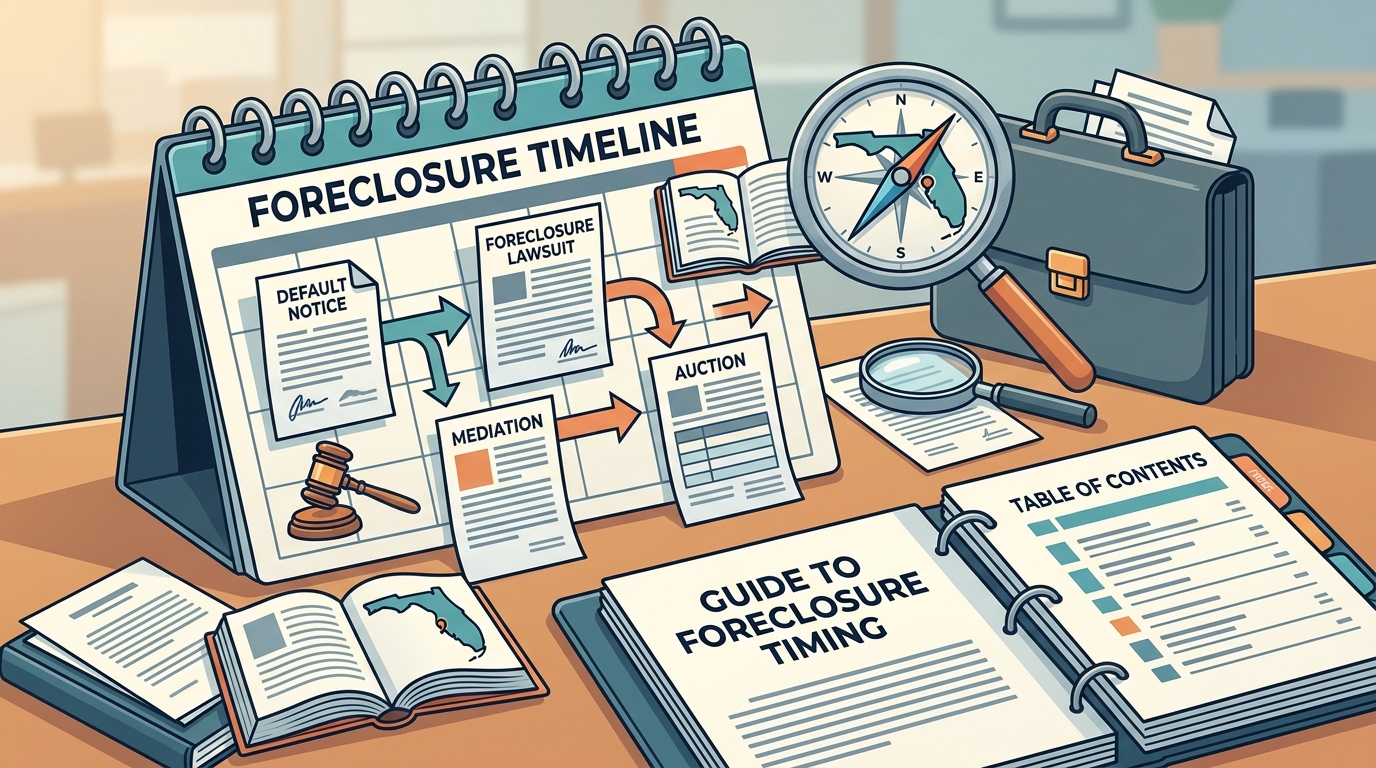
Understanding the specific documents that trigger the legal process is vital for timing your legal consultation. Florida uses judicial foreclosure, meaning your lender must file a lawsuit in court and get a judgment before your home can be sold. This process usually takes months, which gives you time to act if you start early. However, missing a single deadline can lead to a default judgment and the loss of your home.
The Default or Breach Letter
Most mortgages require the lender to send a written notice before speeding up the loan, a process called acceleration. This letter usually states how much you owe to catch up and gives a deadline, often at least 30 days. This is the first major trigger. You should seek advice immediately upon receiving this letter. It is the last chance to resolve the issue informally with the servicer before the legal machinery starts moving. Understanding Foreclosure in Florida involves recognizing these early warning signs.
The 120-Day Rule and Federal Protections
Under federal rules, a servicer generally cannot make the first foreclosure filing until you are more than 120 days behind. Submitting a complete application for help early gives you the strongest protections. If you are behind but have not yet hit the 120-day mark, you are in a critical window. This is the time to gather documents and apply for loss mitigation. Waiting until the 120th day to act is too late to maximize your options.
The Foreclosure Lawsuit and Response Deadlines
Once the lender files a lawsuit, you will be served with a summons and complaint. You generally have 20 days after being served to file a written response with the court. Missing this deadline can lead to a default judgment, where the court rules in the lender's favor without hearing your side. This is the most urgent trigger for seeking legal advice. If you have been served with lawsuit papers, you need to speak with a licensed Florida attorney immediately. Foreclosure Guard can help you understand the timeline and connect you with the appropriate legal resources if your case requires court intervention.
Deficiency Judgments
A deficiency judgment is a court order that holds you personally liable for the difference between the foreclosure sale price and the total amount you owed on the mortgage. Understanding this risk is crucial when deciding how to exit a foreclosure. In Florida, the rules regarding deficiency judgments can be complex and depend on the type of loan and the circumstances of the sale.
How Deficiency Judgments Work
If your home sells at auction for less than the judgment amount, the lender may seek a deficiency judgment for the remaining balance. This judgment can follow you for years and affect your ability to get future credit. It is important to note that if your home sells for more than you owe, you may be entitled to the surplus funds. You can claim this surplus through the court. Be cautious with anyone who offers to recover it for a large percentage of the funds.
Protecting Yourself from Deficiency
Comparison of Foreclosure Exit Strategies
| Strategy | Credit Impact | Deficiency Risk | Best For |
|---|---|---|---|
| Reinstatement | Low (if caught up) | None | Temporary cash flow issues |
| Loan Modification | Moderate | None | Long-term income reduction |
| Short Sale | Moderate to High | Varies (waiver needed) | Cannot afford home, has equity |
| Deed in Lieu | Moderate to High | Varies (waiver needed) | Cannot afford home, no equity |
| Foreclosure | High | High | Last resort |
Key Takeaways
- Seek legal advice immediately upon receiving a default or breach letter.
- The 120-day rule is a critical window for applying for loss mitigation before a lawsuit is filed.
- You generally have only 20 days to respond to a foreclosure lawsuit in Florida.
- Reinstatement and repayment plans are best for temporary hardships.
- Loan modifications are best for long-term income changes.
- Short sales and deeds in lieu may have a smaller credit impact than foreclosure.
- Deficiency judgments can hold you liable for the difference between the sale price and the debt.
- Always get any waiver of deficiency in writing before signing exit documents.
Frequently Asked Questions
How soon should I call a lawyer after missing a mortgage payment?
You should seek advice as soon as you receive a default or breach letter. This is typically after 60 to 90 days of delinquency. Acting early allows you to explore loss mitigation options before the 120-day rule triggers the possibility of a lawsuit.
What is the 120-day rule in foreclosure?
The 120-day rule is a federal regulation that prevents mortgage servicers from filing a foreclosure lawsuit until you are more than 120 days behind on payments. This rule is designed to give homeowners time to apply for and receive a response to loss mitigation applications.
Can I stop a foreclosure after the lawsuit is filed?
Yes, but options narrow quickly. You can still reinstate the loan, sell the home, or reach an agreement with the lender before the sale date. However, you must act immediately and respond to the lawsuit within the 20-day window to protect your rights in court.
What is a deficiency judgment?
A deficiency judgment is a court order that holds you personally liable for the remaining balance of your mortgage after the home is sold at foreclosure for less than the amount you owed. It can affect your credit and ability to get future loans.
Does Foreclosure Guard provide legal representation?
Foreclosure Guard is not a law firm and does not give legal or tax advice. We help you understand your options and deadlines. If your case requires court intervention, we will refer you to a licensed Florida attorney. We are not a government agency and are not affiliated with your lender.
How can I get free legal help in Tampa?
Free civil legal help, including foreclosure, is available for eligible low-income residents of Hillsborough, Pasco, Pinellas, Manatee, and Sarasota counties through Bay Area Legal Services. You can also use the Florida Bar Lawyer Referral Service for a referral to a private attorney.
What documents should I gather before calling for help?
Gather recent mortgage statements, any letters from your servicer, court papers you have received, proof of income, a list of monthly expenses, and a short written explanation of your hardship. These documents help us and any attorney understand your situation quickly.
Can I claim surplus funds if my home sells for more than I owe?
Yes, if your home sells at a foreclosure auction for more than the judgment amount, you may be entitled to the surplus. You can file a claim with the court yourself. Be cautious with anyone who offers to recover it for a large percentage of the funds.
Conclusion
Timing is everything in foreclosure. The difference between keeping your home and losing it often comes down to how quickly you act after receiving a notice. Foreclosure Guard is here to help Tampa and Florida homeowners navigate these critical moments. We provide free, confidential consultations to explain your options in plain language. Whether you are just behind on payments or have been served with lawsuit papers, reaching out early gives you the best chance to protect your property and your financial future. To plan your next step, today.