

What Legal Options a Free Consultation Offers Tampa Homeowners
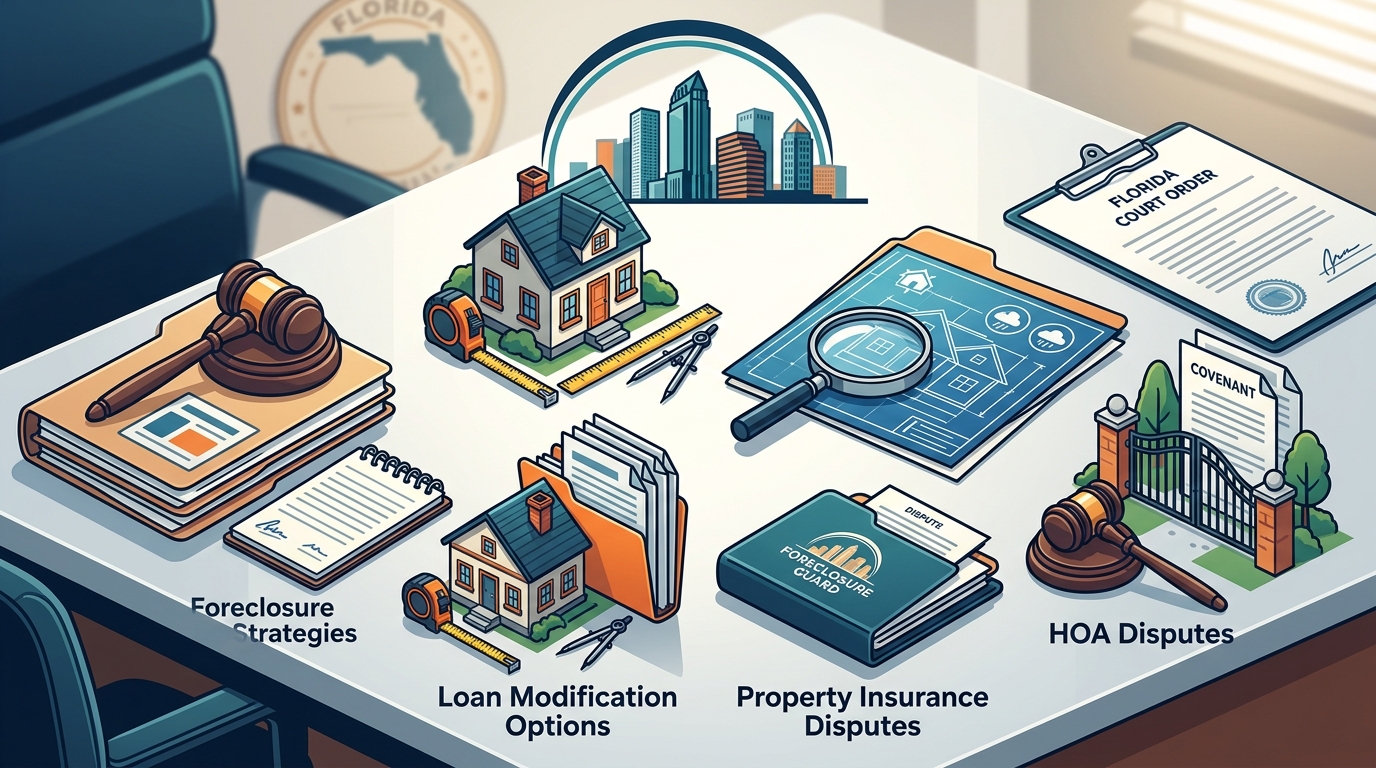
Foreclosure Guard offers Tampa homeowners a free, confidential consultation to review specific legal options for stopping foreclosure. This guide covers four core areas: foreclosure defense strategies, loan modification options, property insurance disputes, and HOA disputes. We explain how a free assessment helps you understand your rights, deadlines, and next steps in Florida's judicial foreclosure process.
Foreclosure Defense Strategies
Florida is a judicial foreclosure state, meaning your lender must file a lawsuit in circuit court and obtain a judgment before your home can be sold. This legal requirement creates a timeline that gives homeowners time to act if they start early. A free consultation with Foreclosure Guard helps you identify where you stand in this process and which defenses are available.
Understanding the 120-Day Rule
Under federal rules, a mortgage servicer generally cannot make the first foreclosure filing until you are more than 120 days behind on payments. This rule provides a critical window for homeowners to seek help. During this period, you can submit a complete application for loss mitigation, which strengthens your legal protections. Acting within this window is often the difference between keeping your home and losing it.
Responding to Foreclosure Lawsuits
If you are served with a summons and complaint, you generally have 20 days to file a written response with the court. Missing this deadline can lead to a default judgment, which is difficult to overturn. A free consultation helps you understand the specific deadlines in your case and the importance of responding promptly. Many Florida courts also offer foreclosure mediation or case management programs that can be part of your defense strategy.
Common Legal Defenses
Foreclosure defense is not just about paying what you owe. It involves examining the legality of the foreclosure process itself. Common defenses include challenging the standing of the party filing the lawsuit, identifying errors in the loan documents, and asserting violations of federal or state consumer protection laws. A free assessment helps you determine if these defenses apply to your specific situation.
| Defense Strategy | Key Requirement | Typical Timeline |
|---|---|---|
| Standing Challenge | Proof that the filer does not own the note | During litigation |
| Procedural Errors | Documentation of missed notices or deadlines | During litigation |
| Consumer Protection Violations | Evidence of unfair or deceptive practices | During litigation |
Loan Modification Options
A loan modification is a permanent change to your mortgage terms designed to make your payment more affordable. This is one of the most common ways to stop foreclosure and keep your home. A free consultation helps you evaluate whether a modification is a viable option based on your income, expenses, and equity.
Types of Loan Modifications
Lenders may offer several types of modifications, including interest rate reductions, term extensions, or principal forbearance. Each type has different implications for your long-term financial health. For example, extending the loan term lowers your monthly payment but may increase the total interest paid over the life of the loan. Understanding these trade-offs is essential before you agree to any terms.
The Loss Mitigation Process
To qualify for a loan modification, you must submit a loss mitigation application to your servicer. This application requires detailed financial documentation, including proof of income, bank statements, and a hardship letter. A free consultation can help you organize these documents and understand what your lender is asking for. Submitting a complete and accurate application early in the delinquency process is crucial for success.
Reinstatement and Forbearance
While not permanent modifications, reinstatement and forbearance are important short-term options. Reinstatement involves paying everything you are behind on, plus fees, in one payment to bring the loan current. Forbearance is a temporary pause or reduction in payments during a short-term hardship. These options can buy you time while you work toward a permanent solution. A free assessment helps you determine if these temporary fixes are appropriate for your situation.
Property Insurance Disputes
Property insurance disputes can complicate foreclosure cases, especially if your home is damaged or if your insurance coverage is contested. These disputes often arise when a lender forces you to buy force-placed insurance, which is typically more expensive and offers less coverage than your own policy. A free consultation can help you understand how insurance issues affect your mortgage and your legal options.
Force-Placed Insurance
If your homeowner's insurance lapses, your lender may purchase force-placed insurance to protect their interest in the property. This insurance is usually more expensive and does not cover your personal property. If you believe your insurance was valid or that the lapse was not your fault, you may have legal grounds to dispute the force-placed policy. A free assessment can help you review your insurance history and identify potential disputes.
Impact on Foreclosure
Insurance disputes can delay foreclosure proceedings or affect the outcome of a loan modification. If your home is damaged and your insurance claim is denied, you may face additional financial strain that makes your mortgage payment unaffordable. Understanding the connection between your insurance coverage and your mortgage obligations is important. A free consultation helps you see the full picture of your financial and legal situation.
HOA Disputes
Homeowners Association (HOA) disputes can become a significant factor in foreclosure cases. If you fall behind on HOA dues, the association may place a lien on your property. This lien can complicate your mortgage and make it harder to sell or modify your loan. A free consultation can help you understand how HOA liens affect your foreclosure case and what options you have to resolve them.
HOA Liens and Foreclosure
In Florida, HOA liens can be enforced through a separate foreclosure process. If an HOA forecloses on its lien, it can affect your mortgage and your ability to keep your home. Understanding the priority of your mortgage versus the HOA lien is critical. A free assessment helps you determine the status of any HOA liens and how they interact with your mortgage obligations.
Resolving HOA Disputes
Resolving HOA disputes often involves negotiating a payment plan or challenging the validity of the lien. If you believe the HOA has violated its bylaws or state law, you may have legal grounds to dispute the lien. A free consultation can help you review your HOA documents and identify potential legal arguments. Resolving these disputes early can prevent them from complicating your foreclosure case.
Key Takeaways
- Florida is a judicial foreclosure state, requiring lenders to file a lawsuit before selling your home.
- The 120-day rule provides a critical window for homeowners to seek loss mitigation options.
- You generally have 20 days to respond to a foreclosure lawsuit after being served.
- Loan modifications can permanently change your mortgage terms to make payments affordable.
- Force-placed insurance can be disputed if your original policy was valid.
- HOA liens can complicate foreclosure cases and may need to be resolved separately.
- A free consultation with Foreclosure Guard helps you understand your specific legal options and deadlines.
Frequently Asked Questions
What is the first step I should take if I am behind on my mortgage?
The first step is to contact your mortgage servicer and ask about loss mitigation options. You should also consider a free consultation with Foreclosure Guard to understand your legal rights and deadlines. Acting early gives you the most options.
How long does the foreclosure process take in Florida?
The foreclosure process in Florida typically takes several months because it is a judicial process. The timeline depends on how quickly you respond to the lawsuit and whether you pursue a defense or a modification. A free consultation can help you understand the specific timeline for your case.
Can I keep my home if I am more than 120 days behind?
Yes, it is still possible to keep your home even if you are more than 120 days behind. Options include loan modification, short sale, or deed in lieu of foreclosure. A free assessment helps you determine which option is best for your situation.
What is force-placed insurance?
Force-placed insurance is a policy purchased by your lender if your homeowner's insurance lapses. It is usually more expensive and offers less coverage than your own policy. You may be able to dispute force-placed insurance if your original policy was valid.
How do HOA liens affect foreclosure?
HOA liens can complicate foreclosure cases by creating additional debt on your property. They may need to be resolved before you can sell your home or modify your loan. A free consultation can help you understand the impact of HOA liens on your case.
Is a free consultation really free?
Yes, the initial consultation with Foreclosure Guard is free and confidential. There is no obligation to work with us, and we will explain your options in plain language. The goal is to help you make an informed decision about your next steps.
Conclusion
Facing foreclosure in Tampa is stressful, but you have options. A free consultation with Foreclosure Guard helps you understand the specific legal options available to you, including foreclosure defense strategies, loan modifications, insurance disputes, and HOA issues. We provide clear, plain-language guidance to help you make informed decisions about your home and your future. To get started, for a free, confidential consultation.