

Free Consultation vs. Paid Legal Defense: Stopping Foreclosure in Florida
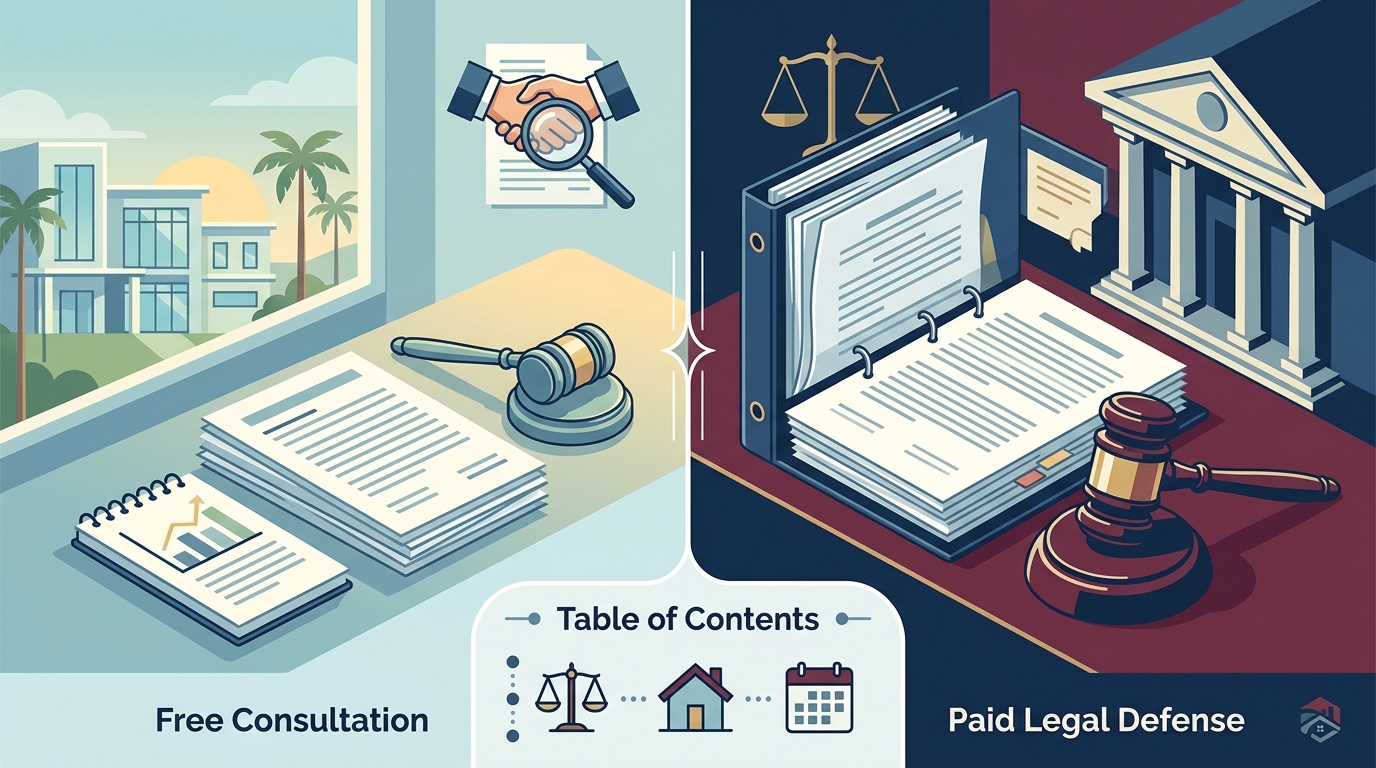
Choosing between a free consultation and paid legal defense depends on your specific foreclosure stage and financial capacity. A free consultation helps you understand your options, while paid legal defense provides active court representation. This guide compares both approaches to help Tampa homeowners make informed decisions.
Loss Mitigation Options
Loss mitigation is a process where lenders work with borrowers to modify loan terms to prevent foreclosure. This approach is often the first step in stopping foreclosure because it addresses the root cause of the delinquency. Homeowners should explore these options before considering legal action.
Common Loss Mitigation Strategies
Reinstatement involves paying the entire past-due amount to bring the loan current. Forbearance agreements allow borrowers to pause or reduce payments temporarily. Loan modifications permanently change loan terms, such as interest rates or loan duration, to make payments affordable. Each strategy has different eligibility requirements and long-term financial impacts.
When to Pursue Loss Mitigation
Loss mitigation is most effective when homeowners act early in the delinquency process. Under federal rules, servicers generally cannot file for foreclosure until borrowers are more than 120 days behind. This window provides time to negotiate with lenders. Homeowners should document their hardship and submit complete applications to maximize their chances of approval.
HUD Foreclosure Counseling
HUD-approved housing counseling is a free service that helps homeowners understand their foreclosure options. These counselors provide guidance on loss mitigation, budgeting, and rights as a borrower. They do not provide legal advice but help homeowners prepare for conversations with lenders and attorneys.
Benefits of HUD Counseling
HUD counselors help homeowners organize their financial documents and understand the foreclosure timeline. They can connect borrowers with appropriate resources and explain how different options affect credit scores. This service is particularly useful for homeowners who are unsure where to start or who need help preparing for a legal consultation.
How to Access HUD Services
Homeowners can find HUD-approved counselors through the Consumer Financial Protection Bureau's housing counselor search tool. These services are free and confidential. Counselors can help homeowners create realistic budgets and identify assistance programs that may be available. This preparation makes subsequent legal consultations more productive.
Paid Attorney Retainers
Paid legal defense involves hiring a licensed attorney to represent homeowners in foreclosure proceedings. This approach provides active legal representation, including filing responses to lawsuits, negotiating with lenders, and appearing in court. Attorneys charge retainer fees, which are typically paid upfront to secure their services.
When Paid Defense is Necessary
Paid legal defense becomes necessary when homeowners are served with foreclosure lawsuit papers. In Florida, homeowners generally have 20 days to file a written response after being served. Missing this deadline can result in a default judgment. Attorneys can also negotiate with lenders for better terms or represent homeowners in bankruptcy proceedings.
Cost Considerations
Attorney fees vary based on the complexity of the case and the attorney's experience. Homeowners should discuss fee structures, including retainer amounts and hourly rates, before hiring. Some attorneys offer flat fees for specific services. Understanding these costs helps homeowners make informed decisions about their legal representation.
Legal Aid Services
Legal aid services provide free or low-cost legal representation to eligible low-income homeowners. These nonprofit organizations help individuals who cannot afford private attorneys. Eligibility is typically based on income limits and other factors determined by each organization.
Availability in Tampa Bay
Bay Area Legal Services provides free civil legal help, including foreclosure defense, for eligible residents of Hillsborough, Pasco, Pinellas, Manatee, and Sarasota counties. The Florida Senior Legal Helpline serves eligible residents age 60 and older. The Florida Veterans Legal Helpline assists eligible veterans. These services have waiting lists, so homeowners should apply as soon as possible after being served with foreclosure papers.
Limitations of Legal Aid
Legal aid organizations have limited capacity and may not be able to take every eligible case. They typically focus on cases with strong legal merits or where the homeowner has no other options. Homeowners should not delay seeking legal help while waiting for legal aid approval. Acting quickly preserves more options and strengthens the homeowner's position.
Comparison of Approaches
| Approach | Cost | Best For | Timeline | Legal Representation |
|---|---|---|---|---|
| Free Consultation | Free | Understanding options and preparing documents | Immediate | No |
| HUD Counseling | Free | Budgeting and loss mitigation preparation | 1-2 weeks | No |
| Paid Attorney | Retainer fees vary | Active court representation and negotiation | Immediate upon hiring | Yes |
| Legal Aid | Free or low-cost | Eligible low-income homeowners in active litigation | Waiting list applies | Yes |
Key Takeaways
- Free consultations help homeowners understand their options without financial commitment.
- HUD counseling provides free guidance on budgeting and loss mitigation preparation.
- Paid attorneys provide active legal representation in court proceedings.
- Legal aid services offer free representation to eligible low-income homeowners.
- Acting early preserves more options and strengthens the homeowner's position.
- Homeowners should not ignore foreclosure lawsuit papers or miss court deadlines.
- Combining free resources with paid legal defense often provides the best outcome.
- Documenting hardship and organizing financial records improves all approaches.
Frequently Asked Questions
Is a free consultation enough to stop foreclosure?
A free consultation helps you understand your options but does not provide legal representation. If you are in active litigation, you will likely need an attorney to file responses and appear in court. The consultation helps you prepare for that next step.
How much do foreclosure attorneys cost in Florida?
Attorney fees vary based on case complexity and the attorney's experience. Some charge retainer fees upfront, while others bill hourly. Discuss fee structures before hiring to understand your total costs.
Can I use HUD counseling and an attorney together?
Yes, these services complement each other. HUD counselors help you prepare documents and understand your options, while attorneys provide legal representation. Using both can make your legal case stronger.
How quickly should I act after receiving foreclosure papers?
Act immediately. In Florida, you generally have 20 days to respond to a foreclosure lawsuit. Missing this deadline can result in a default judgment. Contact an attorney or legal aid service as soon as possible.
What if I cannot afford a private attorney?
Look into legal aid services that provide free or low-cost representation to eligible low-income homeowners. Bay Area Legal Services and other nonprofit organizations may be able to help. Apply as soon as possible due to waiting lists.
Do I need an attorney if I am not yet in court?
You do not need an attorney for loss mitigation negotiations with your lender. However, consulting with an attorney can help you understand your rights and options. A free consultation can clarify whether you need full legal representation.
How do I find a qualified foreclosure attorney in Tampa?
Use the Florida Bar Lawyer Referral Service to find licensed attorneys in your area. Ask about their experience with foreclosure cases and their fee structures. A free initial consultation can help you assess whether they are the right fit.
What documents should I prepare before a legal consultation?
Gather your mortgage statements, any letters from your servicer, court papers you have received, proof of income, and a list of monthly expenses. Having these documents ready makes your consultation more productive.
Conclusion
Choosing between a free consultation and paid legal defense depends on your foreclosure stage and financial situation. Free resources like HUD counseling and initial consultations help you understand your options and prepare documents. Paid legal defense provides active court representation when you are in litigation. Legal aid services offer free representation to eligible low-income homeowners. Acting early and combining these approaches gives you the best chance of stopping foreclosure. Contact Foreclosure Guard for a free, confidential consultation to discuss your specific situation.