

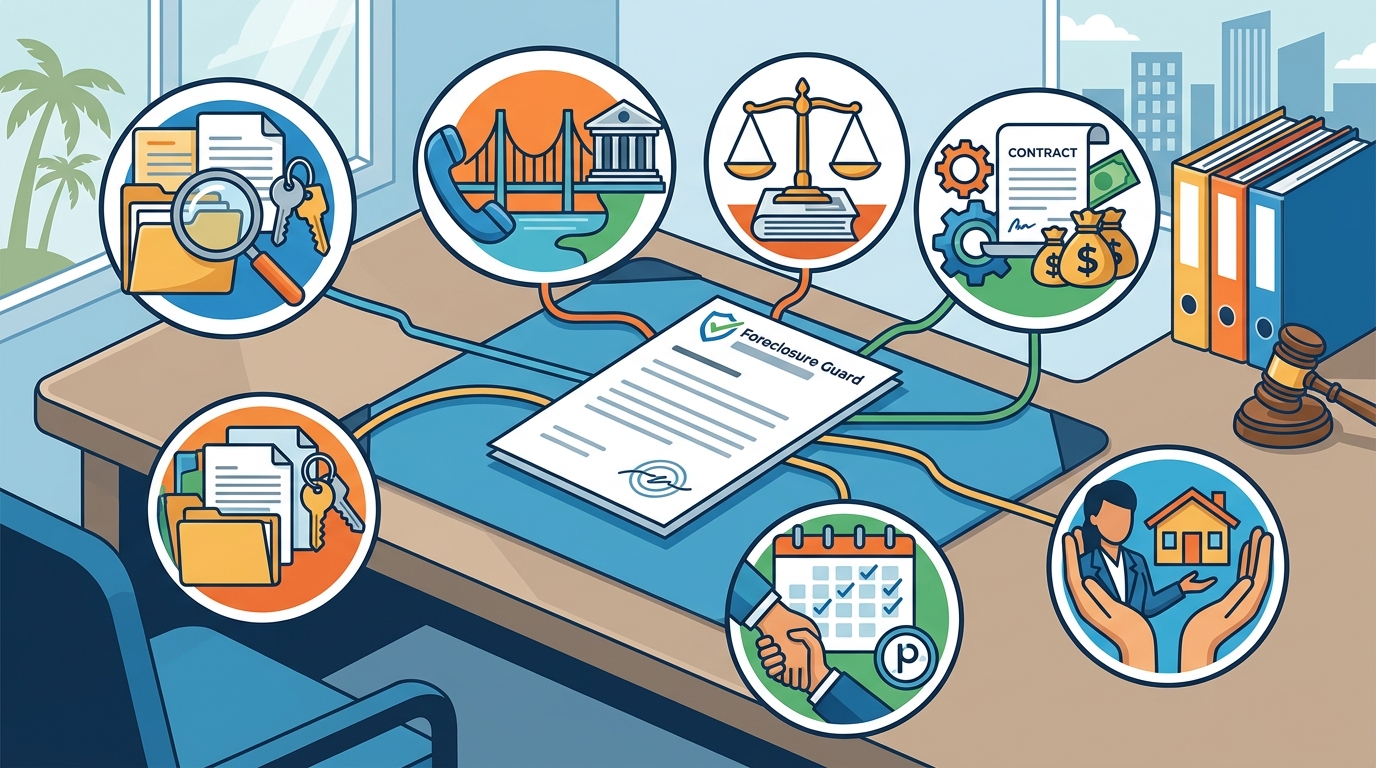
A free consultation with Foreclosure Guard outlines six immediate steps to stop foreclosure proceedings: reviewing loss mitigation options, contacting your lender, evaluating bankruptcy, analyzing loan modifications, negotiating forbearance, and securing housing counselor assistance. This guide details how each step works in Florida, the specific deadlines you must meet, and how to prepare for your first call to protect your home.
Loss Mitigation Options
Loss mitigation is the formal process where a lender works with a borrower to avoid foreclosure. It is the first line of defense in any consultation. Foreclosure Guard helps you identify which loss mitigation programs fit your specific financial situation. The goal is to find a solution that keeps you in your home or allows you to exit with minimal damage to your credit.
Understanding the Programs
Lenders offer several types of loss mitigation. A reinstatement requires paying all past-due amounts in one lump sum. A repayment plan allows you to catch up over several months. A short sale lets you sell the home for less than you owe. A deed in lieu of foreclosure involves voluntarily giving the property back to the lender. Each option has different implications for your credit score and future housing stability.
Choosing the Right Path
During a free consultation, we review your income, expenses, and equity. We explain the pros and cons of each option in plain language. We help you prepare the documents your lender will ask for. This preparation is critical because incomplete applications often lead to denial. Acting early gives you the most choices.
Lender and Servicer Contact
Many homeowners avoid calling their lender out of fear. This silence often accelerates the foreclosure process. Understanding the foreclosure timeline is essential. Federal rules require servicers to attempt contact with you early in the delinquency. You must open every letter and call your servicer to ask what help is available.
The 120-Day Rule
Under federal regulations, a mortgage servicer generally cannot make the first foreclosure filing until you are more than 120 days behind on payments. This rule provides a window of time to act. Submitting a complete application for help early gives you the strongest protections. If you are behind but have not yet hit the 120-day mark, you still have time to negotiate.
What to Say on the Call
When you call, state clearly that you want to discuss loss mitigation options. Ask for a loss mitigation application. Write down the name of the person you speak with and the date of the call. Keep a record of all communications. This paper trail is vital if you need to dispute errors later.
Bankruptcy and the Automatic Stay
Bankruptcy is a legal tool that can pause a foreclosure immediately. The automatic stay is a court order that stops most collection actions, including foreclosure, the moment you file. It is a powerful shield, but it is not a permanent solution on its own. You must consult with a licensed bankruptcy attorney to determine if this is the right path for you.
How the Stay Works
Filing for bankruptcy triggers the automatic stay. This stops the lender from proceeding with the sale. It also stops phone calls and letters. However, the stay is temporary. You must still address the underlying debt. If you do not propose a plan to pay the debt, the lender can ask the court to lift the stay. Bankruptcy can be complex and has long-term consequences.
When to Consider It
Bankruptcy may be appropriate if you have significant non-mortgage debt or if you are facing a sale date very soon. It can buy you time to reorganize your finances. Foreclosure Guard can help you understand the basics, but we always refer you to a licensed attorney for legal advice. Do not file for bankruptcy without professional legal guidance.
Loan Modification
A loan modification is a permanent change to your original loan terms. It is designed to make your monthly payment more affordable. This is often the best option if you intend to stay in your home long-term. The lender may reduce your interest rate, extend the loan term, or forgive some of the principal balance. The goal is to bring your payment to a level you can sustain.
Eligibility and Documentation
To qualify for a modification, you must demonstrate a hardship. This could be job loss, medical issues, or a change in family circumstances. You will need to provide proof of income, bank statements, and a hardship letter. The application process can take several months. It is important to follow up regularly with your lender to keep the application moving.
Impact on Credit
A successful loan modification is generally less damaging to your credit than a completed foreclosure. It shows that you worked with your lender to resolve the issue. However, it may still appear on your credit report. We explain how different options typically show up on your credit before you choose. Nobody can promise a specific score change, but we can help you make an informed decision.
Forbearance Agreements
A forbearance agreement is a temporary pause or reduction in payments. It is ideal for short-term hardships where you expect your income to return to normal. For example, if you are on medical leave or waiting for a bonus, forbearance can bridge the gap. You do not pay, or you pay a reduced amount, for a set period. After the period ends, you must resume normal payments or enter a repayment plan.
Types of Forbearance
There are different types of forbearance. A full forbearance means you pay nothing. A partial forbearance means you pay a reduced amount. The terms depend on your lender and your specific situation. It is important to understand how the missed payments will be handled after the agreement ends. They may be added to the end of your loan or require a lump sum payment.
Negotiating Terms
You can negotiate the terms of a forbearance agreement. Be clear about how long you need the break. Explain your expected return to full income. Get the agreement in writing. Do not rely on verbal promises. A written agreement protects you and ensures both parties understand the terms. Foreclosure Guard can help you understand what to ask for during these negotiations.
Housing Counselor Assistance
HUD-approved housing counselors provide free or low-cost advice. They are trained to help you understand your options. They can review your budget and help you prepare documents for your lender. This is an independent resource that complements the help you receive from Foreclosure Guard. You can find a HUD-approved counselor near you by calling 800-569-4287.
What They Do
Housing counselors can help you create a realistic budget. They can explain the difference between a short sale and a deed in lieu. They can help you understand the impact of each option on your credit. They are not attorneys, so they cannot give legal advice. However, they are excellent at helping you organize your finances and communicate with your lender.
How to Use Them
Call the HUD hotline to find a counselor in your area. Schedule an appointment. Bring all your financial documents. Be honest about your situation. The counselor will work with you to develop a plan. This plan can then be presented to your lender. Using a housing counselor shows your lender that you are serious about resolving the issue.
Key Takeaways
- A free consultation with Foreclosure Guard outlines six immediate steps to stop foreclosure.
- Loss mitigation is the formal process where a lender works with a borrower to avoid foreclosure.
- Federal rules generally prevent foreclosure filing until you are more than 120 days behind.
- Bankruptcy triggers an automatic stay that pauses foreclosure, but requires legal advice.
- A loan modification permanently changes loan terms to make payments affordable.
- Forbearance agreements provide a temporary pause in payments for short-term hardships.
- HUD-approved housing counselors offer free assistance in preparing documents and budgets.
- Acting early gives you the most options and protects your credit.
Frequently Asked Questions
How quickly can a free consultation help me?
A free consultation can help you immediately by clarifying your options and deadlines. We can review your situation on the phone and tell you what to do next. This helps you stop the panic and start a plan. The sooner you call, the more options you have.
Is a loan modification better than a short sale?
It depends on your goals. If you want to stay in your home, a loan modification is usually better. If you want to move, a short sale may be the right choice. We explain the credit impact of each option so you can decide what is best for your family.
Can I do this without a lawyer?
You can handle many steps without a lawyer, such as contacting your lender and applying for loss mitigation. However, if you are served with a lawsuit, you should talk to a licensed attorney. Foreclosure Guard can refer you to legal resources if your case requires one.
What documents do I need for a consultation?
You should have your recent mortgage statements, any letters from your servicer, and proof of income. A list of your monthly expenses is also helpful. You can use our Budget Calculator to organize your numbers before the call.
Will calling my lender hurt my credit?
No, calling your lender does not hurt your credit. In fact, working with your lender can help protect your credit. It shows that you are trying to resolve the issue. Ignoring the problem is what causes the most damage.
How long does a loan modification take?
A loan modification can take several months. The timeline depends on your lender and the completeness of your application. It is important to follow up regularly. We can help you track the process and keep you informed.
Conclusion
Facing foreclosure is stressful, but you do not have to face it alone. A free consultation with Foreclosure Guard provides a clear roadmap to protect your home. We help you understand loss mitigation options, contact your lender, and evaluate legal tools like bankruptcy. We also connect you with housing counselors and help you negotiate forbearance or loan modifications. Acting early is your best defense. Call us today for a free, confidential consultation. We are here to listen and help you find a solution that works for your family.