

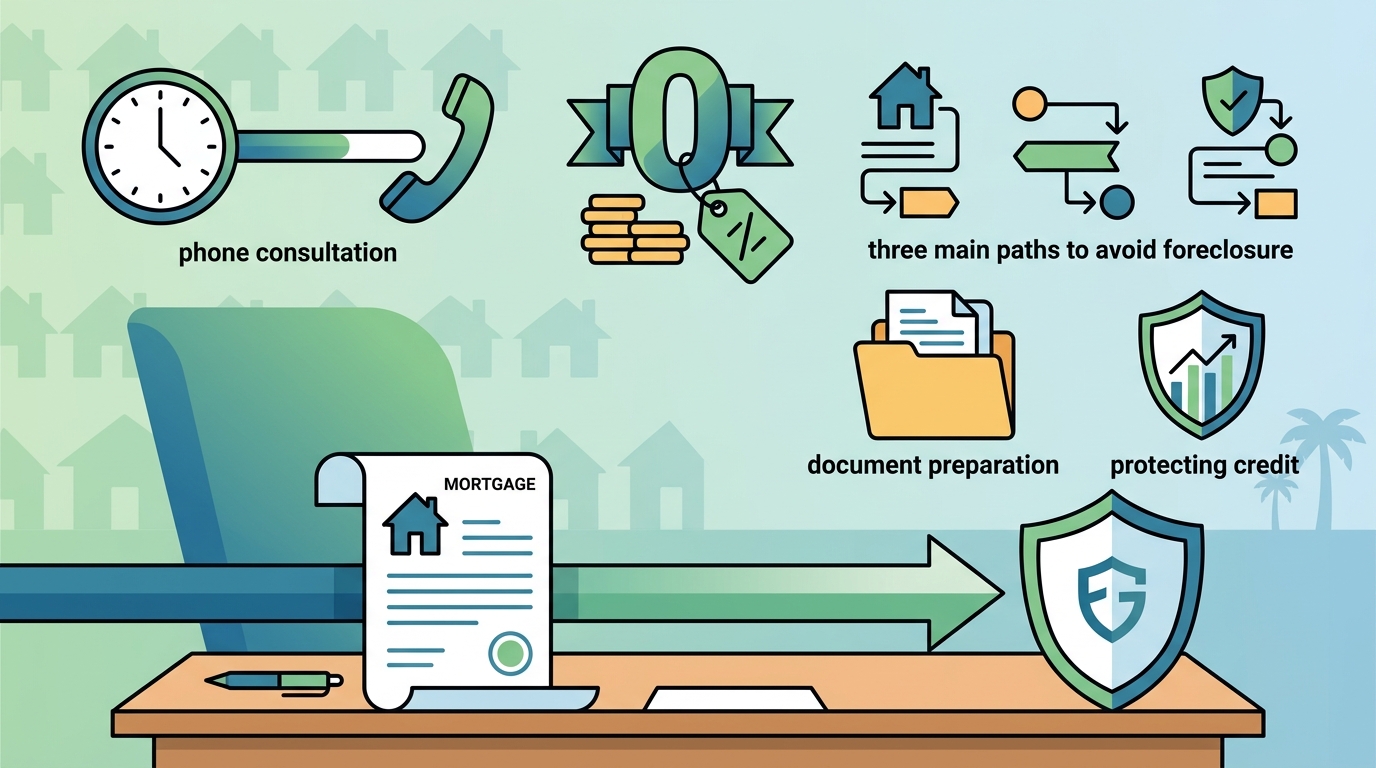
The cost of a free foreclosure consultation in Tampa, Florida, is $0. Foreclosure Guard provides a 100% confidential, no-obligation phone consultation where we review your mortgage situation and explain your options in plain language. This guide covers what happens during the call, the three main paths to avoid foreclosure, how to prepare your documents, and how to protect your credit during the process.
Free Consultation Availability
Foreclosure Guard offers a free initial consultation to homeowners in Tampa and the greater Florida area. This service is designed to be accessible to anyone facing financial hardship, regardless of their current legal status or credit score. The consultation is strictly confidential, meaning your personal financial details are not shared with third parties without your explicit permission.
Who Qualifies for Free Help
There are no strict income limits or credit score requirements to speak with us. If you are behind on payments, have received a notice of default, or are simply worried about your ability to keep your home, you qualify. Our team helps you understand your situation before you make any major decisions. We do not charge for the initial assessment or for explaining your options.
How to Get Started
You can reach us by calling our Tampa office or by submitting a request for a callback. The process is designed to be low-pressure. We listen to your story first, then we review the specific deadlines you are facing. This ensures that the advice you receive is tailored to your unique timeline and financial reality.
What Happens During the Call
A free foreclosure consultation is not a sales pitch. It is an information session where we help you map out your next steps. The call typically follows a four-step process to ensure we cover all critical aspects of your case.
Step 1: Listening to Your Story
We start by understanding what happened. Did you lose your job? Did you face a medical emergency? Did your income drop due to a business slowdown? Understanding the root cause of your delinquency helps us determine which solutions are most likely to work for you.
Step 2: Reviewing Your Situation
We look at the specific documents you have received. This includes mortgage statements, letters from your servicer, and any court papers. We identify where you are in the Florida foreclosure timeline. Knowing your exact position is crucial because options narrow as the process moves forward.
Step 3: Explaining Your Options
We walk you through the three main ways out of foreclosure that could fit your situation. We explain what each option means for your home, your credit, and your future. We also discuss the timing and deadlines involved with each path.
Step 4: Moving Forward
You make the final decision. If you choose to work with us, we help you take the next step. If another option makes more sense, we will point you in the right direction. We are here to support your decision, not to pressure you into one.
Three Ways to Avoid Foreclosure
While there are several legal mechanisms to stop a foreclosure, we focus on three primary strategies that are most commonly applicable to homeowners in Tampa. Understanding the differences between these options is the first step in protecting your home.
1. Loan Modification
A loan modification is a permanent change to the terms of your existing mortgage. This might involve lowering your interest rate, extending the loan term, or reducing the principal balance. The goal is to make your monthly payment affordable based on your current income. This is often the best option if you want to stay in your home long-term and have a stable income now.
2. Forbearance and Repayment Plans
A forbearance agreement is a temporary pause or reduction in payments during a short-term hardship. A repayment plan allows you to catch up on missed payments over several months on top of your regular payment. These are ideal if your financial difficulty is temporary, such as a short-term illness or a brief period of unemployment.
3. Selling the Home
Sometimes, the best way to avoid the severe credit damage of a completed foreclosure is to sell the home. This can be a traditional sale on the market or a short sale with your lender's approval. If you have equity, you keep it. If you owe more than the home is worth, a short sale may be the path to a cleaner exit. We help you understand the financial implications of selling versus staying.
| Option | Best For | Credit Impact | Timeline |
|---|---|---|---|
| Loan Modification | Long-term stability | Lower than foreclosure | Months |
| Forbearance | Temporary hardship | Varies by terms | Short-term |
| Short Sale | Exiting the loan | Less than foreclosure | Months |
Preparing Your Documents
Having the right documents ready before your consultation makes the process faster and more effective. Lenders and courts require specific proof of your financial situation. Gathering these items in advance shows that you are serious about resolving the issue.
Essential Financial Documents
You should gather your most recent mortgage statements and any letters from your servicer. Include proof of income, such as pay stubs, benefit letters, or bank statements. A list of your monthly expenses is also critical. You can use our free budget calculator to organize these numbers quickly and accurately.
Legal and Court Papers
If you have been served with a lawsuit, keep every paper you receive. Write down the date you received each document. In Florida, you generally have 20 days to respond to a foreclosure lawsuit. Missing this deadline can lead to a default judgment. We can help you understand what these papers mean and what your next legal steps should be.
Credit Impact and Rebuilding
Foreclosure is a major event on your credit report. A completed foreclosure stays on your credit report for up to 7 years. However, the damage is often caused by the months of missed payments leading up to the foreclosure. Acting early can limit how many late payments are reported.
Comparing Credit Consequences
Options like a loan modification or a short sale can affect your credit differently than a completed foreclosure. How much your score drops depends on your full credit history and how the account is reported. We will explain how each option may show up on your credit before you choose. Nobody can promise a specific score change, but we can help you make an informed decision.
Rebuilding After a Hardship
After a financial crisis, rebuilding your credit is a priority. Pay every current bill on time. Keep credit card balances low compared to your limits. You can check your credit reports for free at AnnualCreditReport.com. If you find errors, you can dispute them directly with the credit bureau. This is a free process that you do not need to pay a company to do.
Avoiding Foreclosure Scams
When homeowners are stressed, they become vulnerable to scams. Be very careful with anyone who asks for a large upfront fee before doing any work. Legitimate services, like Foreclosure Guard, do not charge for the initial consultation or for explaining your options.
Red Flags to Watch For
Never sign over your deed or sign documents you do not understand without having an attorney review them. Keep talking to your lender. Do not stop because someone told you to. Get every promise in writing. If your home sells at a foreclosure auction for more than you owe, you may be entitled to the surplus. You can claim it through the court yourself. Be cautious with anyone who offers to recover it for a large percentage.
Key Takeaways
- The cost of a free foreclosure consultation in Tampa is $0.
- Foreclosure Guard provides a confidential, no-obligation assessment of your situation.
- Florida uses judicial foreclosure, which gives you time to act if you start early.
- You generally have 20 days to respond to a foreclosure lawsuit in Florida.
- Loan modifications, forbearance, and selling are the three main paths to avoid foreclosure.
- Acting early limits the number of late payments reported to credit bureaus.
- Always verify the legitimacy of any service asking for upfront fees.
- Free HUD-approved housing counseling is available at 800-569-4287.
Frequently Asked Questions
Is the foreclosure consultation really free?
Yes. The initial consultation with Foreclosure Guard is completely free and confidential. We do not charge for the assessment or for explaining your options.
Do I need a lawyer for a foreclosure consultation?
Foreclosure Guard is not a law firm and does not give legal advice. However, we can help you understand your options and refer you to a licensed Florida attorney if your case requires legal representation.
What documents should I have ready for the call?
Have your recent mortgage statements, any letters from your servicer, proof of income, and a list of your monthly expenses ready. If you have received court papers, bring those as well.
How long does the consultation take?
The call typically takes 30 to 60 minutes, depending on the complexity of your situation. We take the time needed to ensure you understand your options.
Can I keep my home if I am already in foreclosure?
Yes, it is often possible to stop a foreclosure. Options like loan modification or reinstatement can allow you to keep your home, especially if you act before the sale date is set.
What is the 120-day rule?
Under federal rules, a mortgage servicer generally cannot make the first foreclosure filing until you are more than 120 days behind on payments. This gives you time to seek help.
Will a foreclosure ruin my credit forever?
A completed foreclosure stays on your credit report for up to 7 years. However, you can begin rebuilding your credit immediately after the event by paying bills on time and keeping balances low.
Conclusion
Facing foreclosure is stressful, but you do not have to navigate it alone. The cost of a free foreclosure consultation in Tampa is $0, and that is where your journey toward stability begins. Foreclosure Guard is here to listen, review your situation, and explain your options in plain language. We are not a law firm, but we are a dedicated resource for Florida homeowners who want to understand their path forward.
If you are behind on payments or have received a notice of default, do not wait. Acting early leaves you with more choices. To plan your next step, for a free, confidential consultation today.