

How Often Should You Seek Legal Advice to Stop Foreclosure?
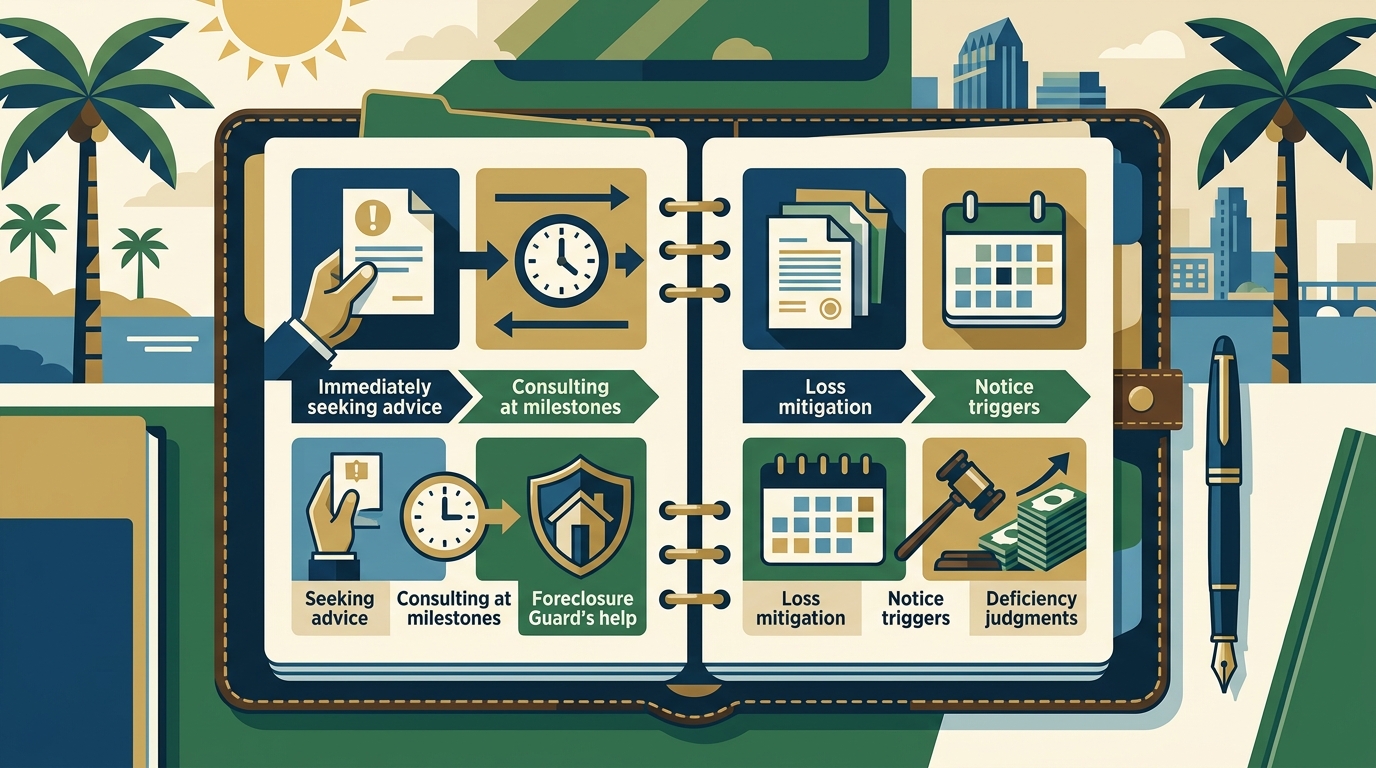
Seek legal advice immediately upon receiving a foreclosure lawsuit, and consult a professional at every major milestone in the process. Foreclosure Guard helps Tampa homeowners navigate these critical deadlines. This guide covers loss mitigation, notice triggers, and deficiency judgments.
Loss Mitigation Options
Loss mitigation is the process of working with your lender to modify loan terms to make payments affordable. It is the first line of defense against losing your home. Homeowners should seek guidance when they first miss a payment or anticipate a hardship.
Reinstatement and Repayment Plans
Reinstatement is paying the past-due amount in a lump sum to bring the loan current. A repayment plan is an agreement to pay the arrears over several months alongside regular payments. These options are best when the hardship is temporary and short-term.
Forbearance and Loan Modification
Forbearance is a temporary pause or reduction in payments during a crisis. A loan modification is a permanent change to the loan terms, such as a lower interest rate or extended term. These require a detailed review of your income and expenses to ensure long-term sustainability.
When to Consult a Professional
You should consult a professional when your lender denies a request or when you are unsure which option fits your situation. Foreclosure Guard can help you understand the implications of each choice before you commit. Acting early preserves more options and reduces stress.
Foreclosure Notice Triggers
Foreclosure notice triggers are specific events or documents that signal the start of the legal process. In Florida, the process is judicial, meaning the lender must file a lawsuit. Understanding these triggers helps you act before deadlines pass.
The 120-Day Rule
Federal rules generally prevent a servicer from filing the first foreclosure lawsuit until you are more than 120 days behind on payments. This window is critical for submitting loss mitigation applications. Missing this window can limit your legal protections.
Summons and Complaint
The summons and complaint are the official court papers that start the lawsuit. You generally have 20 days after being served to file a written response. Ignoring these papers can lead to a default judgment, which is a final order against you. This is the most urgent time to seek legal advice.
Final Judgment and Sale Date
After a final judgment, the court sets a sale date for the auction. Options narrow quickly once this date is scheduled. You may still be able to reinstate, sell, or reach an agreement, but time is extremely limited. Immediate professional guidance is essential at this stage.
Deficiency Judgments
A deficiency judgment is a court order for the difference between the foreclosure sale price and the total amount owed on the mortgage. It is a financial liability that can follow you even after you lose the home. Understanding this risk is vital for long-term financial planning.
How Deficiency Judgments Work
If your home sells for less than you owe, the lender may seek a deficiency judgment for the remaining balance. In Florida, this is possible in many cases, though there are exceptions. A deficiency judgment can affect your credit and lead to wage garnishment or bank levies.
Protecting Yourself from Deficiency
Long-Term Financial Impact
A deficiency judgment can stay on your credit report for up to seven years. It can also make it harder to qualify for future loans. Rebuilding your credit after a foreclosure requires a clear plan. Foreclosure Guard can help you understand how different outcomes affect your credit score.
Key Takeaways
- Seek legal advice immediately when you receive a foreclosure lawsuit.
- Consult a professional at every major milestone, including the 120-day mark and final judgment.
- Loss mitigation options like modification and forbearance require early action.
- Deficiency judgments can follow you after the sale, so understand your exposure.
- Acting early preserves more options and reduces financial stress.
- Foreclosure Guard provides free, confidential consultations to help you navigate these steps.
Frequently Asked Questions
How often should I talk to a lawyer during foreclosure?
You should talk to a lawyer at every major milestone, including when you miss payments, receive a lawsuit, and after a final judgment. Regular check-ins ensure you are not missing critical deadlines.
What is the 120-day rule in Florida?
The 120-day rule is a federal regulation that generally prevents lenders from filing a foreclosure lawsuit until you are more than 120 days behind on payments. This gives you time to seek help.
Can I stop a foreclosure after the sale date is set?
Yes, but options are very limited. You may still be able to reinstate the loan, sell the home, or reach an agreement with the lender. Immediate action is required.
What is a deficiency judgment?
A deficiency judgment is a court order for the remaining balance on your mortgage after the home sells for less than you owe. It can affect your credit and lead to further legal action.
Is a loan modification better than a short sale?
It depends on your situation. A modification lets you keep your home, while a short sale allows you to sell it for less than you owe. A professional can help you decide which is best for your long-term goals.
How does foreclosure affect my credit?
A completed foreclosure stays on your credit report for up to seven years. Alternatives like a short sale or deed in lieu may have a less severe impact. Rebuilding your credit requires a clear plan.
Where can I get free help in Tampa?
You can get free help from Foreclosure Guard, HUD-approved housing counselors, and local legal aid organizations. These resources can help you understand your options and navigate the process.
Conclusion
Foreclosure is a complex legal process with strict deadlines. Seeking legal advice at every major milestone is the best way to protect your home and your financial future. Foreclosure Guard is here to help you understand your options and make informed decisions. To plan your next step, for a free, confidential consultation.