

Homeowners can stop foreclosure by using loss mitigation options like loan modifications, forbearance, or selling the home before the auction. In Florida, the judicial process gives you time to act if you start early. Foreclosure Guard offers a free, no-obligation phone consultation in the Tampa, FL area to help you understand these choices. We are not a law firm, not a government agency, and not affiliated with any lender or servicer. We give no legal or tax advice and never sell your personal information.
Loss Mitigation Options to Keep Your Home
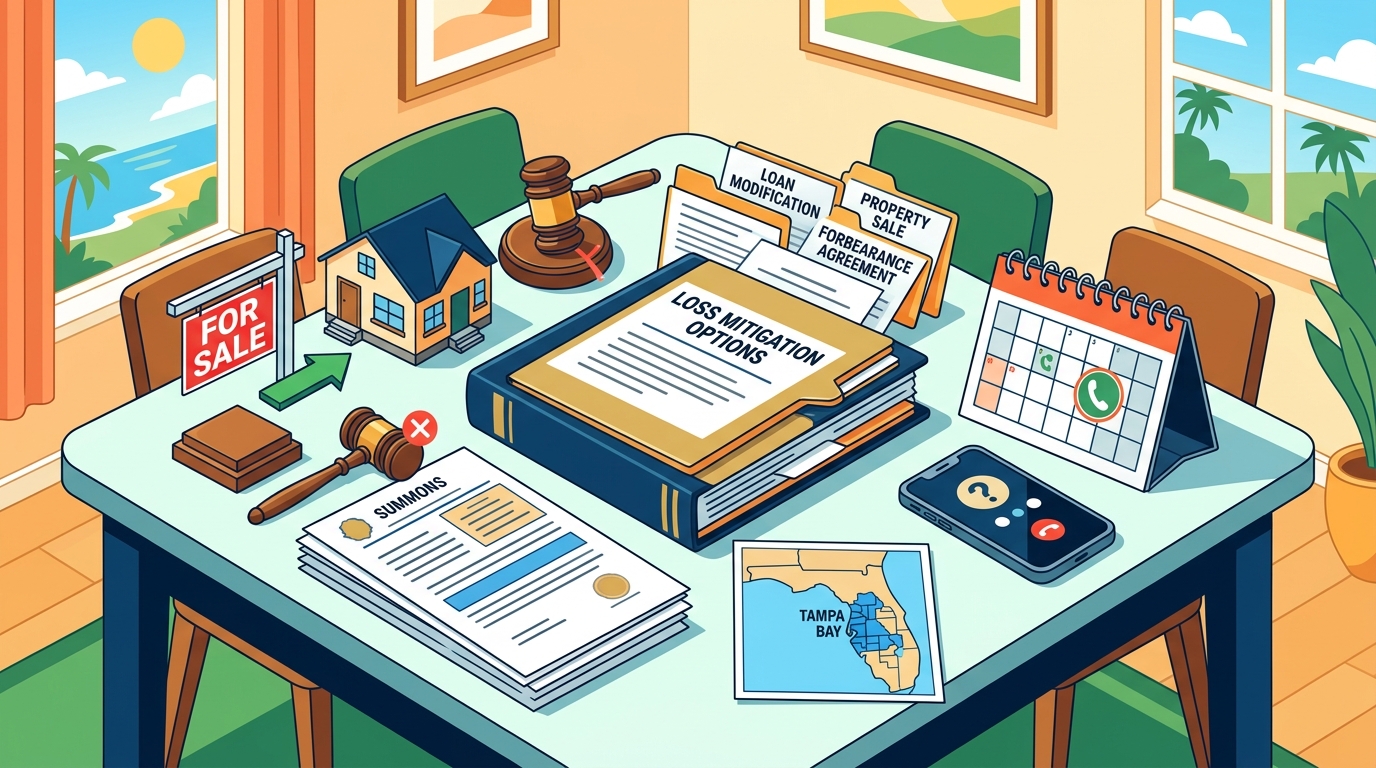
Loss mitigation is the process of working with your lender to find a solution that prevents foreclosure. The most common ways to keep your home include reinstatement, repayment plans, forbearance, and loan modifications. Each option changes your payment or timeline in a different way.
Reinstatement and Repayment Plans
Reinstatement is paying everything you are behind on, plus fees, in one lump sum. A repayment plan is catching up on missed payments over several months on top of your regular payment. These options work best if you have a one-time hardship that is already resolved.
Forbearance and Loan Modification
Forbearance is a temporary pause or reduction in payments during a short-term hardship. A loan modification is permanently changing your loan terms to make the payment more affordable. Under federal rules, a mortgage servicer generally cannot make the first foreclosure filing until you are more than 120 days behind on payments. This window is critical for submitting a complete application for help.
Selling Options to Avoid Foreclosure
If keeping the home is not possible, selling it before the foreclosure sale can protect your credit and equity. A short sale is selling the home for less than you owe, with your lender's approval. A deed in lieu of foreclosure is voluntarily giving the home back to the lender. These alternatives often have shorter waiting periods for buying a home again than a completed foreclosure.
Short Sales and Deed in Lieu
A short sale requires your lender to agree to accept less than the full balance. A deed in lieu is a voluntary surrender of the property. Both options avoid the stigma of a completed foreclosure on your credit report. A completed foreclosure stays on your credit report for up to 7 years, while alternatives may be reported differently.
Traditional Sale
Selling on the market or to a cash buyer before the sale date allows you to keep any equity you have. If your home sells at a foreclosure auction for more than you owe, you may be entitled to the surplus. You can claim this surplus through the court, but be cautious with anyone who offers to recover it for a large percentage. according to A Chapter 13
Bankruptcy and Legal Protections
Filing for bankruptcy can pause a foreclosure immediately. A Chapter 13 bankruptcy may stop a foreclosure permanently if you can catch up on missed payments over time. However, bankruptcy is a complex legal process that requires a licensed attorney. Foreclosure Guard does not provide legal advice. If you have been served with a foreclosure lawsuit, talk to a licensed attorney as soon as you can.
The Judicial Foreclosure Process
Florida is a judicial foreclosure state, meaning your lender must file a lawsuit in circuit court. You generally have 20 days after being served with a summons and complaint to file a written response. Missing this deadline can lead to a default judgment. Many Florida courts offer foreclosure mediation or case management programs, so ask the court clerk or your attorney.
Free Legal Help Resources
Free civil legal help is available for eligible low-income residents through Bay Area Legal Services at 800-625-2257. The Florida Bar Lawyer Referral Service at 800-342-8011 can connect you with a private attorney. These resources are essential for navigating the legal aspects of foreclosure.
Foreclosure Rescue Scam Red Flags
Many homeowners are targeted by scams that promise to stop foreclosure for a fee. Foreclosure Guard does not ask for large upfront fees, does not ask you to sign over your deed, does not guarantee to stop foreclosure, and does not ask you to pay your mortgage to a third party. Be very careful with anyone who asks for a large upfront fee before doing any work.
Common Scam Tactics
Scammers often promise to stop foreclosure in exchange for a large upfront fee. They may ask you to sign over your deed or sign documents you do not understand. Never sign over your deed or sign documents you don't understand without having an attorney review them. Get every promise in writing and keep talking to your lender.
How to Protect Yourself
Verify any company's credentials and check for complaints with the Better Business Bureau or your state attorney general. Use only official resources like HUD-approved housing counselors at 800-569-4287 or the CFPB housing counselor search. Foreclosure Guard is transparent about our role: we provide free, confidential consultations and referrals, but we are not a law firm and do not give legal advice.
Key Takeaways
- Loss mitigation options like loan modifications and forbearance can help you keep your home if you act early.
- Selling your home via a short sale or deed in lieu can be less damaging to your credit than a completed foreclosure.
- Florida's judicial foreclosure process gives you 20 days to respond to a lawsuit, but options narrow quickly after a sale date is set.
- Bankruptcy can pause a foreclosure, but you need a licensed attorney for legal advice.
- Foreclosure Guard offers free, no-obligation consultations in Tampa, FL, but is not a law firm and does not give legal or tax advice.
- Always avoid scams that ask for upfront fees, deed transfers, or guarantees to stop foreclosure.
- Free help is available from HUD-approved counselors, Bay Area Legal Services, and the Florida Bar Lawyer Referral Service.
Frequently Asked Questions
What is the first step to stop foreclosure?
The first step is to contact your mortgage servicer and ask what loss mitigation options are available. You should also gather your financial documents, including recent mortgage statements, proof of income, and a list of monthly expenses.
Can I stop foreclosure if I am already behind on payments?
Yes, you can still stop foreclosure if you are behind on payments. Under federal rules, a servicer generally cannot file for foreclosure until you are more than 120 days behind. Acting early gives you the strongest protections and more options.
Is Foreclosure Guard a law firm?
No, Foreclosure Guard is not a law firm and does not give legal or tax advice. We are not a government agency and are not affiliated with your lender or mortgage servicer. For legal advice, speak with a licensed Florida attorney.
What are the red flags of a foreclosure rescue scam?
Red flags include requests for large upfront fees, asking you to sign over your deed, guarantees to stop foreclosure, and asking you to pay your mortgage to a third party. Foreclosure Guard does none of these things.
How long does a foreclosure stay on my credit report?
A completed foreclosure stays on your credit report for up to 7 years. Alternatives like a short sale or deed in lieu may be reported differently and may have shorter waiting periods for buying a home again.
Where can I get free legal help for foreclosure in Tampa?
You can get free civil legal help from Bay Area Legal Services at 800-625-2257. The Florida Bar Lawyer Referral Service at 800-342-8011 can also connect you with a private attorney in the Tampa area.
Take the First Step Today
Foreclosure is stressful, but you still have options. The sooner you act, the more choices you may have. Foreclosure Guard offers a free, confidential consultation to help you understand your situation in plain language. We are not a law firm, not a government agency, and not affiliated with any lender. We never sell your personal information. To plan your next step, or call 786-686-6765.